Experienced writer & communicator - from GIS, science, and sustainability, to apps, entertainment, and hi-fi. Enthusiastic photographer and science nerd.
Sound bars, receivers, stereos, and surround sound. What to choose?
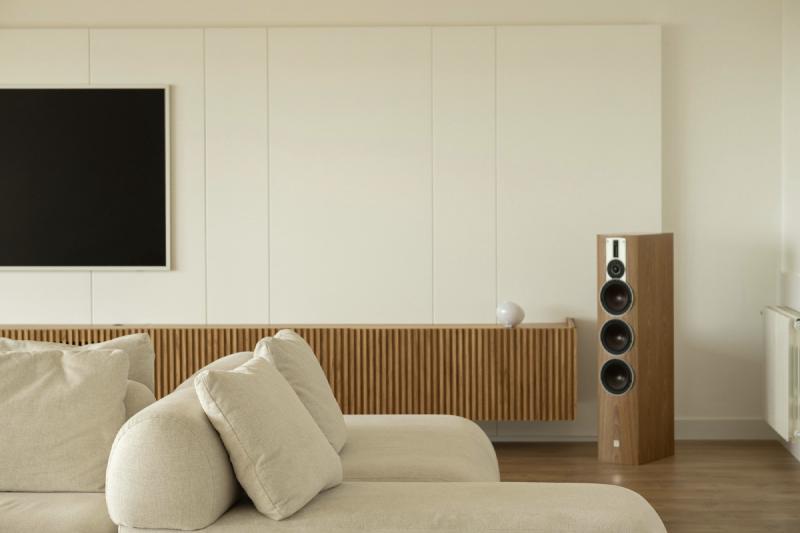
Just your typical suburban lounge room.
Face it: your TV’s in-built speakers aren’t what convinced you to buy the set, and you know as well as I do that you’re expected to hook it up to a proper sound source. After all, sound is just as important a part of immersing yourself in a good movie or TV show as the image itself.
But, when looking to upgrade your TV’s sound (or even upgrade your existing hi-fi or surround system) there are a few things that you really need to consider – even after you’ve decided on a budget.
Namely: do you opt for a sound bar, or a surround receiver? If you’re opting for surround, do you choose a home theatre in-a-box (HTIB), or a larger component system? If you’re opting for the component system, do you spend more on the amp or the speakers? Do you purchase a few high-quality components now and save up for others later, or do you go for a complete setup of a lower quality?
Well, folks, I’m here to walk you down Decision Avenue and guide you to the sweetest spot on the block. Or in the market. Or wherever this analogy ends up.
I’ll start with that very first consideration: how much should you spend? Obviously, this differs for everyone, but, if it will be used for music and movies, you can get a totally kickass thumpin’ system (that you can improve later) for less than $1500. If you have cash to splash, you could easily spend $3500 or more, but let’s start somewhere a little more achievable.
If you’re looking to keep it all below the $1000 mark, or are not too fussed about music, I reckon that you’re best off opting for a mid-range (around $500) sound bar/base or some self-powered bookshelf speakers, rather than an all-in-one HTIB surround system.
Why would I say this? Surely five speakers are better than one (bar), right? Well, not really: given the choice of five cruddy surround speakers, or a decent stereo set, I will always pick the stereo – the extra immersion provided by surround sound won’t make up for the reduced fidelity. And, when comparing soundbars to HTIBs, soundbars come in at around the same price without the extra manufacturing and shipping costs of BD/DVD players and multiple speaker cabinets, so they can put more dollars into providing a superior sound. Add in the fact that you don’t have to deal with all those freakin’ wires running through your loungeroom, and I even wonder why you questioned me in the first place. You should know better.
There is a huge diversity in sound quality when it comes to soundbars – I’ve seen cheaper models trump more expensive ones – so the best thing I can recommend is to try them out for yourself. One of the critical things to listen for is if the subwoofer complements the bar, or if the combination sounds like two separate components. I’ve enjoyed soundbars from Sony, Philips, and Sonos (the latter two providing some great wireless features, which bring the cost up near $1000). However, I haven’t heard a soundbar yet that sounds as good as ‘proper’ bookshelf or floor-standing speakers, so they are still primarily about aesthetics/space saving, and secondarily about sound.
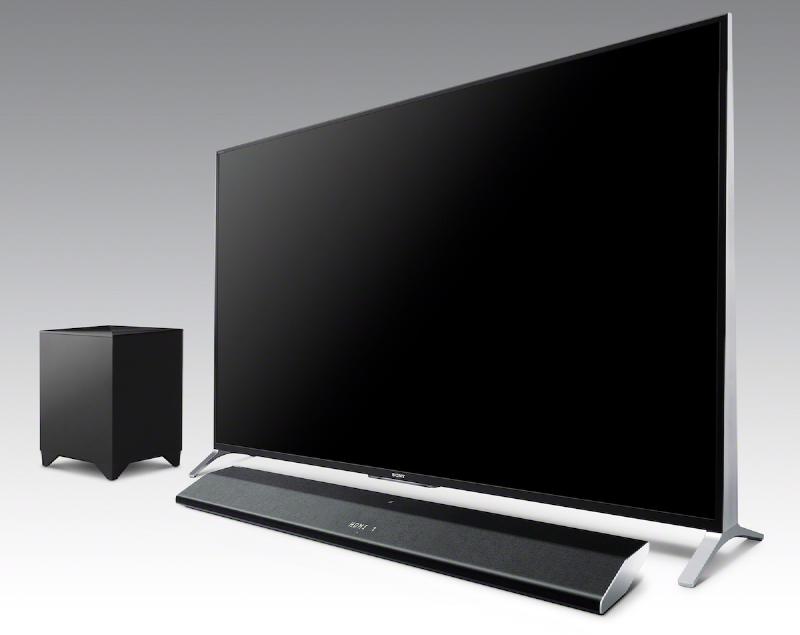
The Sony HT-CT770 sound bar provides good value and reasonable sound.
If you are more about aesthetics, then the features to consider in a soundbar come largely down to connectivity: does it support HDMI, or only optical or coaxial? What about Bluetooth or AirPlay? Can it be wall mounted? Will it block the infrared port on your TV (stopping your remote from working correctly)?
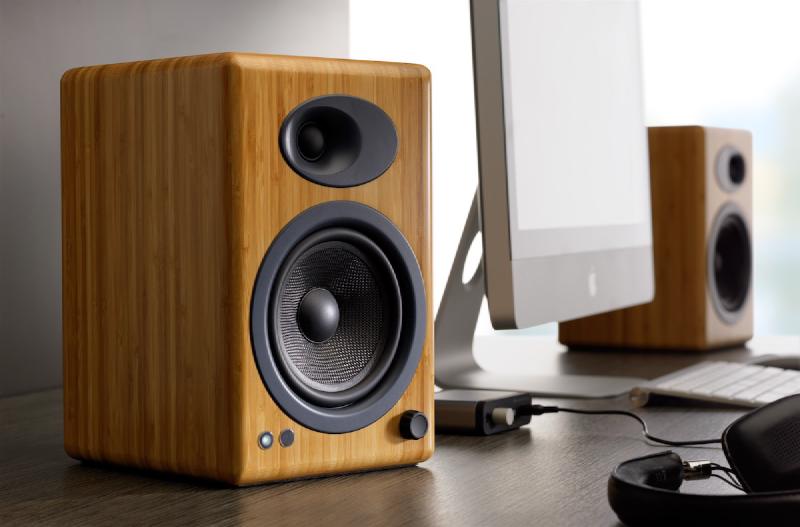
If you’re more concerned with sound, but are on a tight budget, spending $300 on a pair of self-powered speakers like the Audioengine 2+ will be your best bet. You could even consider adding a small (second-hand) subwoofer to hit that lower end. Spend $400 on the A5+ – which are bigger, better, and come with a remote – and you’ll be laughing at anyone who opted for a sound bar - especially if you pair them with a modest sub.
No sound bar can compete with these AudioEngine A5+ powered speakers. And that Bamboo cabinet… pure class.
If you want an honest to goodness surround system, or if you’re going to listen to a fair amount of music on it, then your best bet is to buy an A/V receiver and a set of speakers. The trick is to find the cheapest receiver that provides the features you’re most interested in and then pair it with the best front speakers you can afford, buying the remaining speakers later down the track.
Why? Your speakers are the most important consideration to make and should take up the majority of your budget – after all, they’re free from obsolescence, so will last decades. Further, the sound quality difference across receiver price ranges is much, much more subtle than the sound quality difference across speaker price ranges. To put it another way, a cheap receiver with good speakers will sound significantly better than a good receiver with cheap speakers.
I would expect suitable front floor-standing speakers to cost at least double the price of your receiver – my sweet spot is about $1000-$1500 on front speakers and about $400-$600 on your receiver, making it possible to get a goosebumply system for $1500 – or less during sales or from Auction sites like Gray’s Auctions (“new old stock”) or eBay/Gumtree (second-hand).
In choosing your front speakers, you’re faced with the choice of big floor-standing towers, or smaller bookshelf speakers. Generally, towers can produce more volume, so are better suited to larger rooms, say 4x5m or more. They’ll also be able to produce deeper bass. If you put towers in a small room, you’ll find that you never really turn them up, so you might as well save some money and get good bookshelves (with stands). The extra bass response of towers is also moot if you’re planning on buying a subwoofer.
Aaron, Q Acoustics, Accusound, Yamaha, Paradigm, JBL, Polk Audio, and Klipsch offer good quality at the $600 mark for bookshelves, and $1000 and up for floor-standing towers. You’ll pay much less if you go second-hand or to auctions.
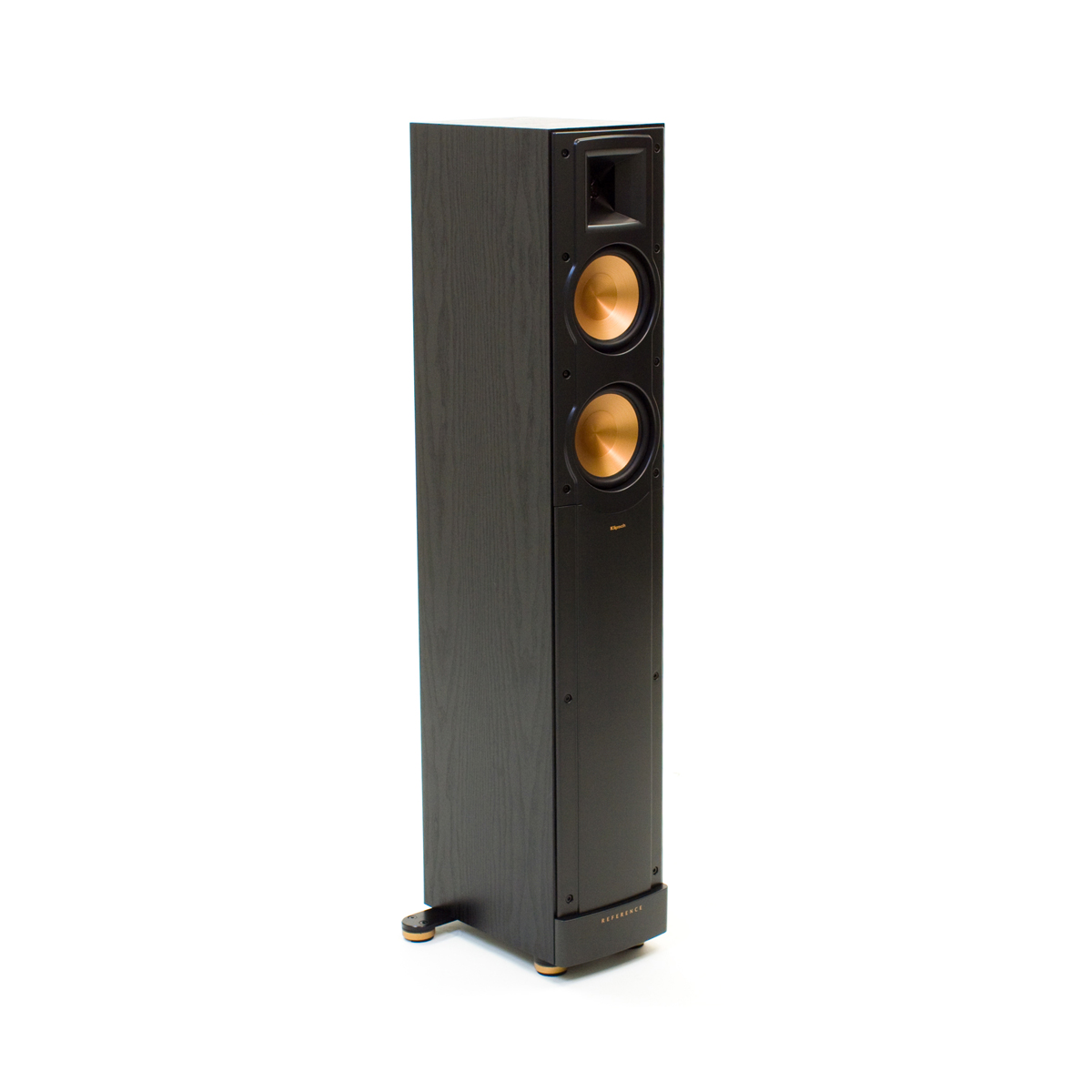
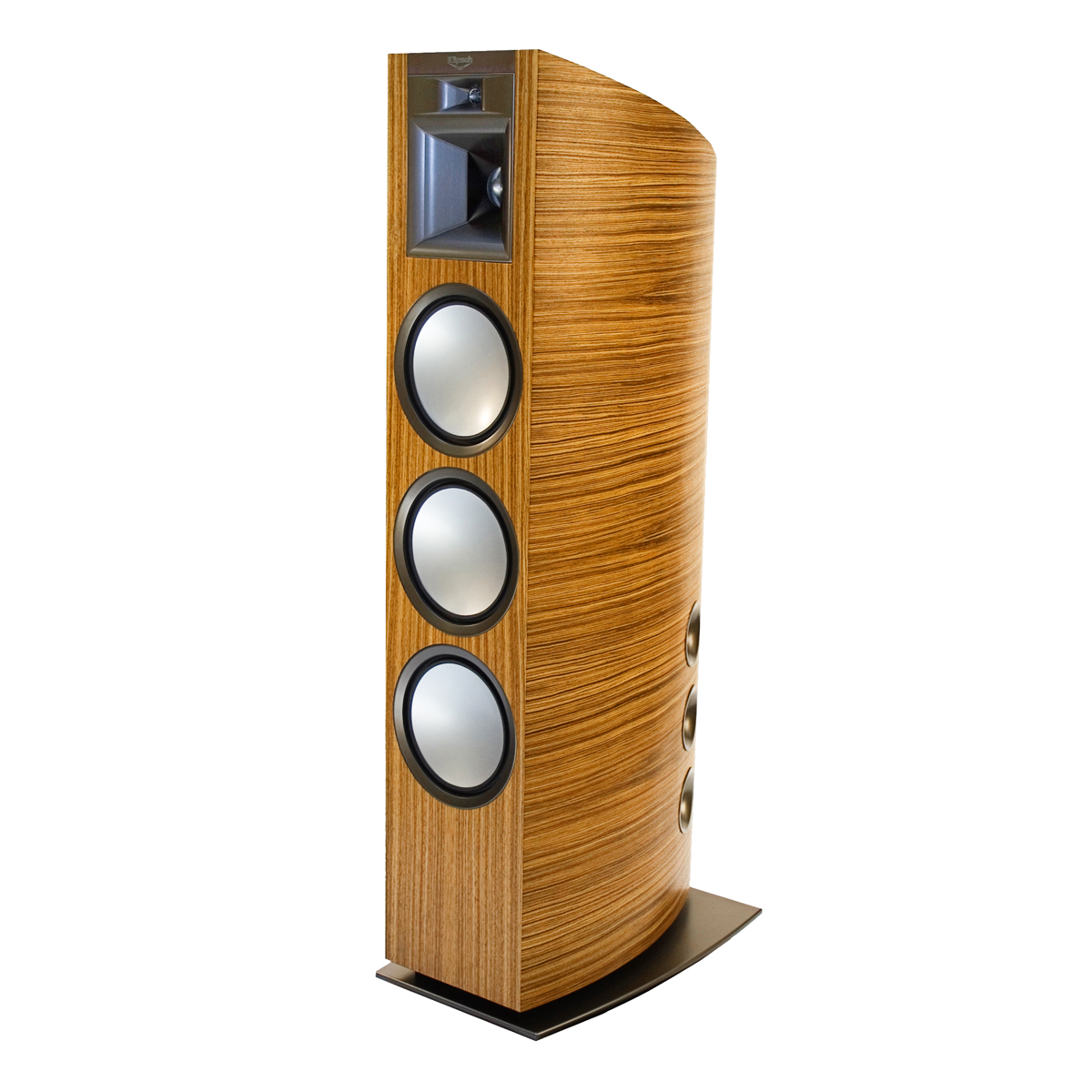
The front speakers are the most important consideration. Klipsch offer speakers ranging from the $1000 RF 42 II… to the $32,000 P39F. One can dream…
Adding a subwoofer will make explosions and bass music more fun, so I’d put priority on it over your centre or surround speakers. Expect to pay about $500 for a decent 10" sub that will work in a small room with bookshelf speakers. But for deeper, louder bass suitable for large or open rooms, you’re looking at $1000+. You’re best off buying as powerful a sub as you can afford – a 500w sub will sound better turned down than a 100w sub turned all the way up. For big rooms or for complementing tower speakers, you’ll want at minimum a sub of 200w for it to be worth the investment. 12" subs will go deeper (and probably louder) than 10" subs, so are great for explosions, but unless you’re into the deepest, darkest corners of the dubstep scene, 10" subs are plenty enough for most music. You can learn more about adding a subwoofer to your system in another of my articles.
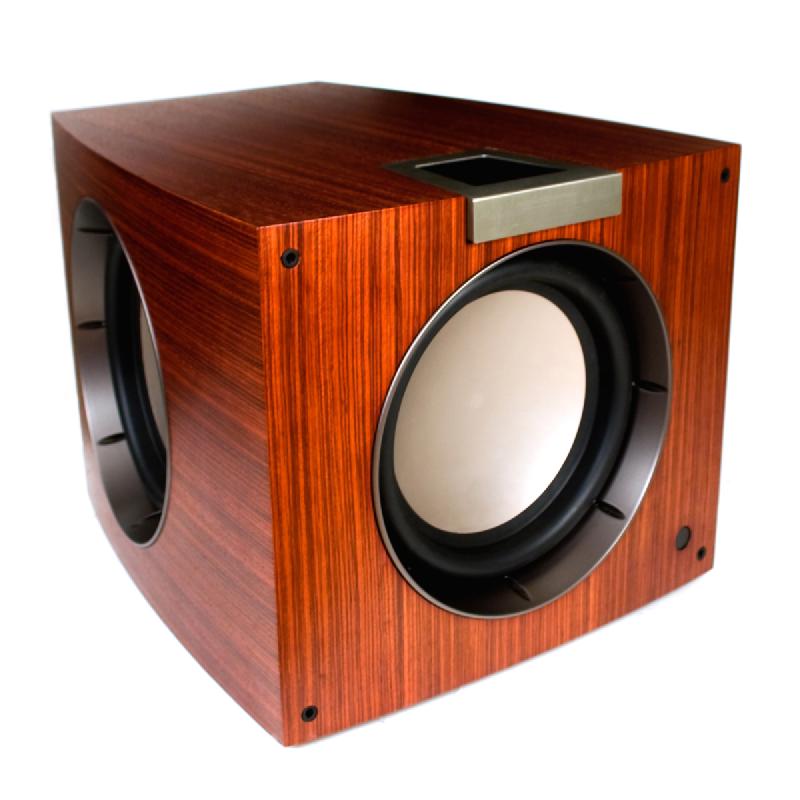
A subwoofer gives deeper bass, and also saves your amplifier from having to spend energy on the thirstier lower frequencies. This Klipsch P312W is a $7000 complement to the P39Fs towers. One can continue to dream…
If, after spending time with your 2.1 system, you remain keen to immerse yourself in surround sound for your games or movies, I would only then save up for some surround speakers. Expect to pay $300+ per speaker – so from $900 for a set of worthy entry-levels. The centre channel is actually the least important of the lot – as it really only centres the dialogue on-screen, which your well-placed, high-quality towers are already doing a great job of – so don’t think that you should pay any more for it than the rear surrounds.
It can be daunting wading through the specs and features of modern receivers, but – perhaps with the exception of room calibration – there is very little practical difference between most. As such, you should be most concerned with three aspects: the number and type of inputs; the power output; and the number of channels.
Entry-level receivers, from $250-$400, tend to have only three HDMI ports, and one to none of the legacy analogue ones, so if you have a plethora of devices, still use your Wii or VCR, or need a phono input for your old record player, then you might be best stepping up to a higher range.
However, you can pick up some great-sounding, powerful 5.1 receivers (I like Yamaha, Sony, and Harmon/Kardon at this price range) for around $400 (lower than this enters you into the danger zone of serious corner-cutting), so if you want to save the cash for better speakers, you can always connect some of your HDMI devices to your TV, and use an optical/coaxial cable or an HDMI port with Audio Return Channel (ARC) to bring the sound back to the receiver. Just keep in mind that not all TVs will send surround sound via HDMI ARC, and it can only send Dolby Digital, and not the newer surround/HD formats on Blu-rays.
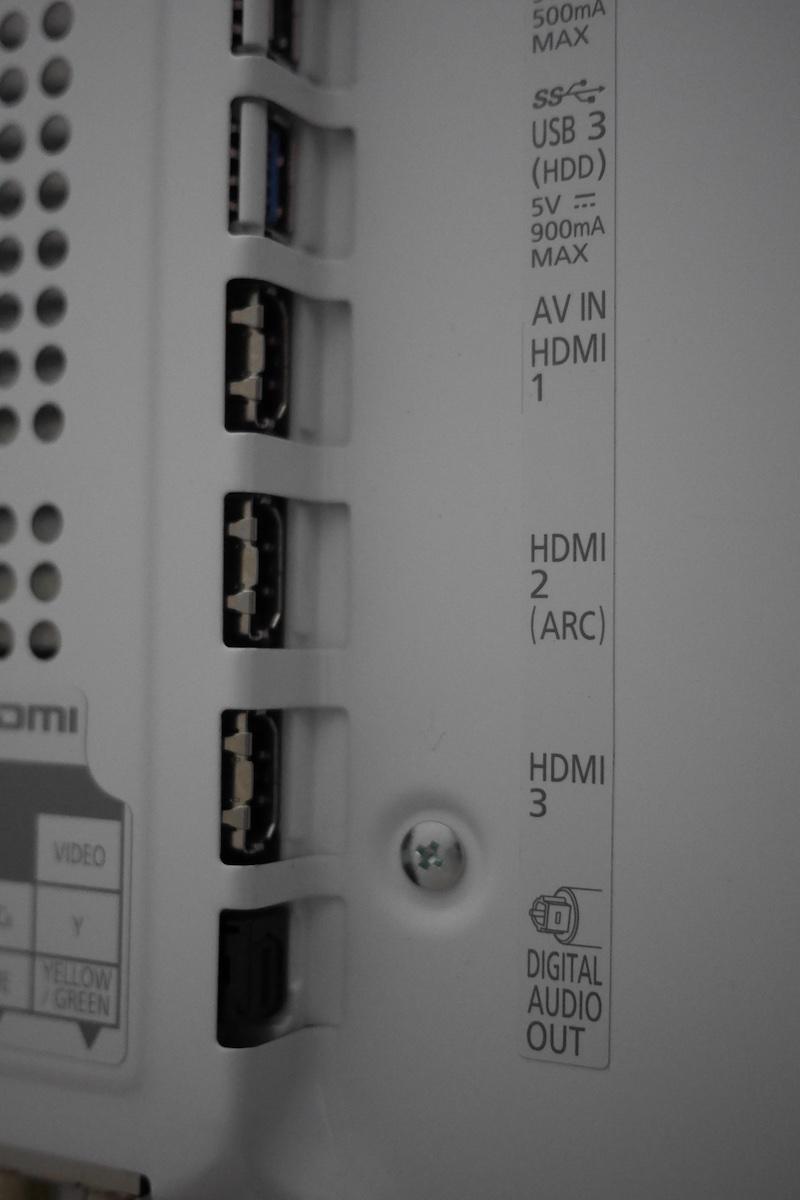
The HDMI Audio Return Channel or digital audio out effectively allow you to connect more devices up to your receiver if you run out of ports.
If you’re unhappy with those limitations, stepping up to the $500-$650 receiver range (my sweet spot) can bring extra features like internet radio, DLNA (for streaming movies or music from your computer) or AirPlay (for streaming music from your iPhone/iPad or computer), and perhaps even 7.1 channel sound.
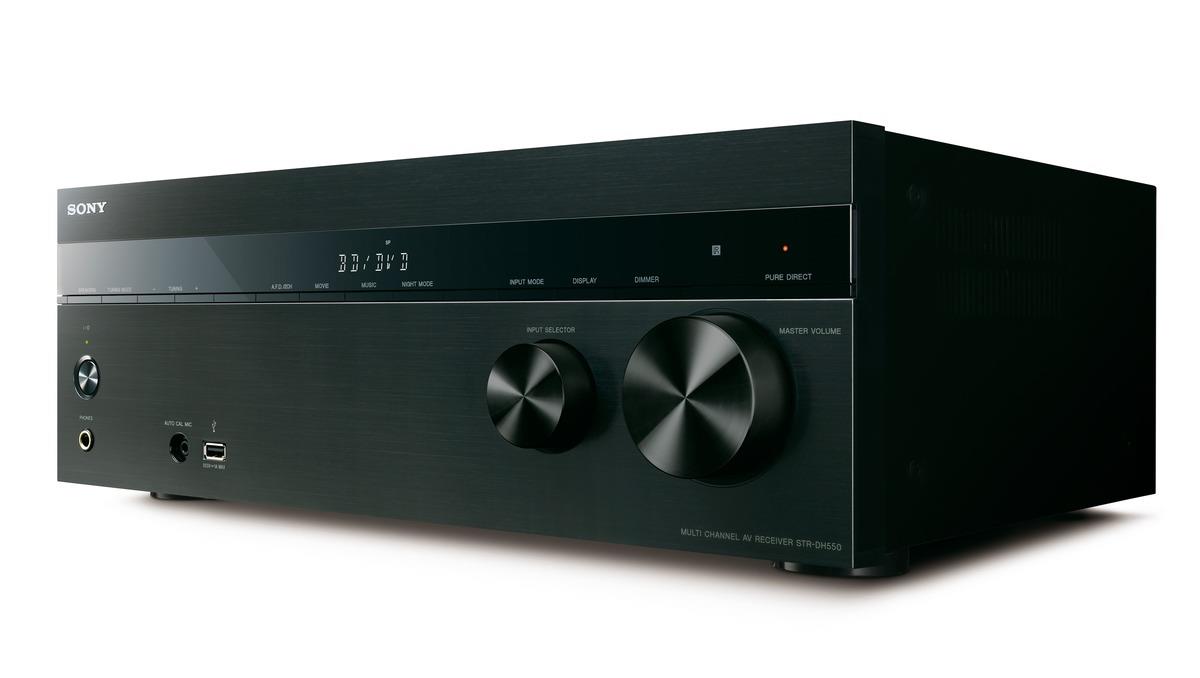
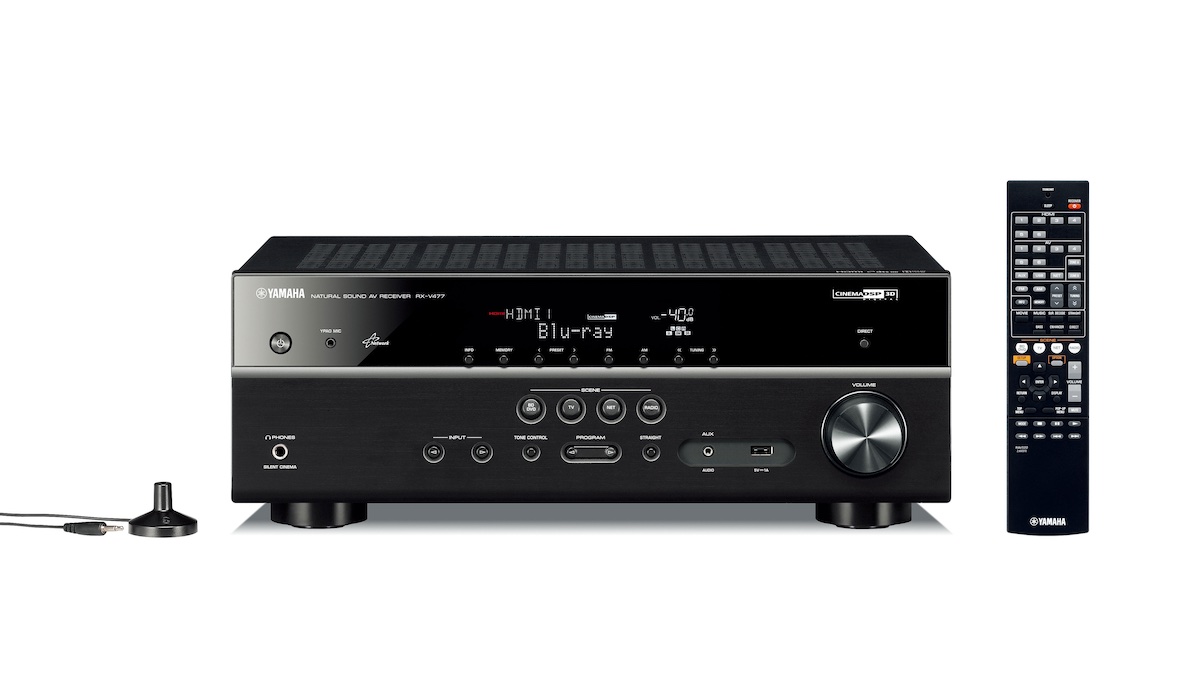
Sony offer attractive, no-nonsense entry-level receivers like the STR-DH550… but I think the best value is found at the mid-level, like the Yamaha RX-V477.
The number of channels is a contentious issue: 7.1 can provide extra immersion, but I’d argue that it isn’t worth the cost. You’re potentially looking at an extra $200 for the amp, then $400-$600+ for two extra speakers. If you instead put that extra cash towards higher-quality front speakers or your subwoofer, then you’re going to notice a much bigger improvement than a little extra ambience in some movies – and that’s also something to consider: movies with proper 7.1 soundtracks are still in the minority.
The power rating of an amp does more than decide the maximum volume – it also controls how well bass passages will sound at lower volumes, and how well it can respond to big spikes in volume (such as explosions). If you pick your speakers before your receiver, take a look at their minimum/recommended power requirement, and choose your receiver accordingly. For what it’s worth, I have 2x three-way tower speakers powered by an 80w per channel stereo amp, and, even during the biggest, most raucous parties, I have never turned it up above ~70%.
One problem, though, is that manufacturers aren’t usually very honest with their power ratings, so stick to the name brands, and avoid super-bottom entry-level devices.
Power and speakers
Remember: a bigger amp can power smaller speakers, but a smaller amp cannot power bigger speakers without damaging itself. So, for flexibility, always buy the biggest output amp you can afford. These days, even low-end receivers will power floor-standing speakers, but double check your speakers’ minimum power requirements before committing to a cheap receiver.
Moving up the spectrum, if you drop $1000 or more on a Denon, Onkyo, Marantz, Yamaha, Sony, Harmon/Kardon, or if you’re seriously flush, Arcam, you’ll get more power combined with all the features you could hope for. However, if you’ve spent that much on a receiver, you should really spend $2000+ on a nice pair or floor-standing speakers to get the most out of it – and that’s not including the surrounds or subwoofer.
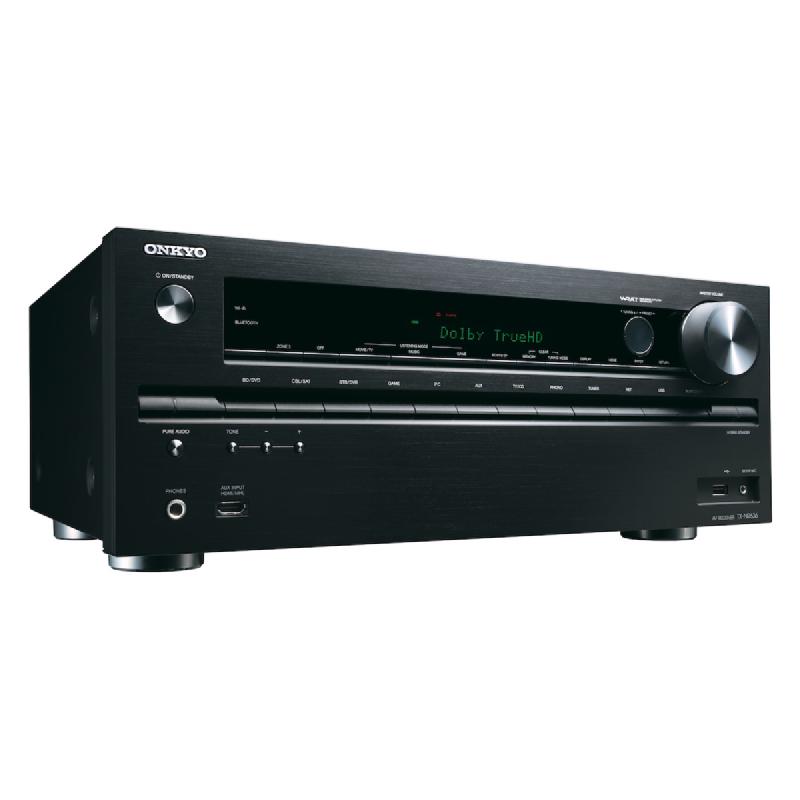
The Onkyo TX-NR636 provides tonnes of power and features, but isn’t for everyone.
Second hand / vintage
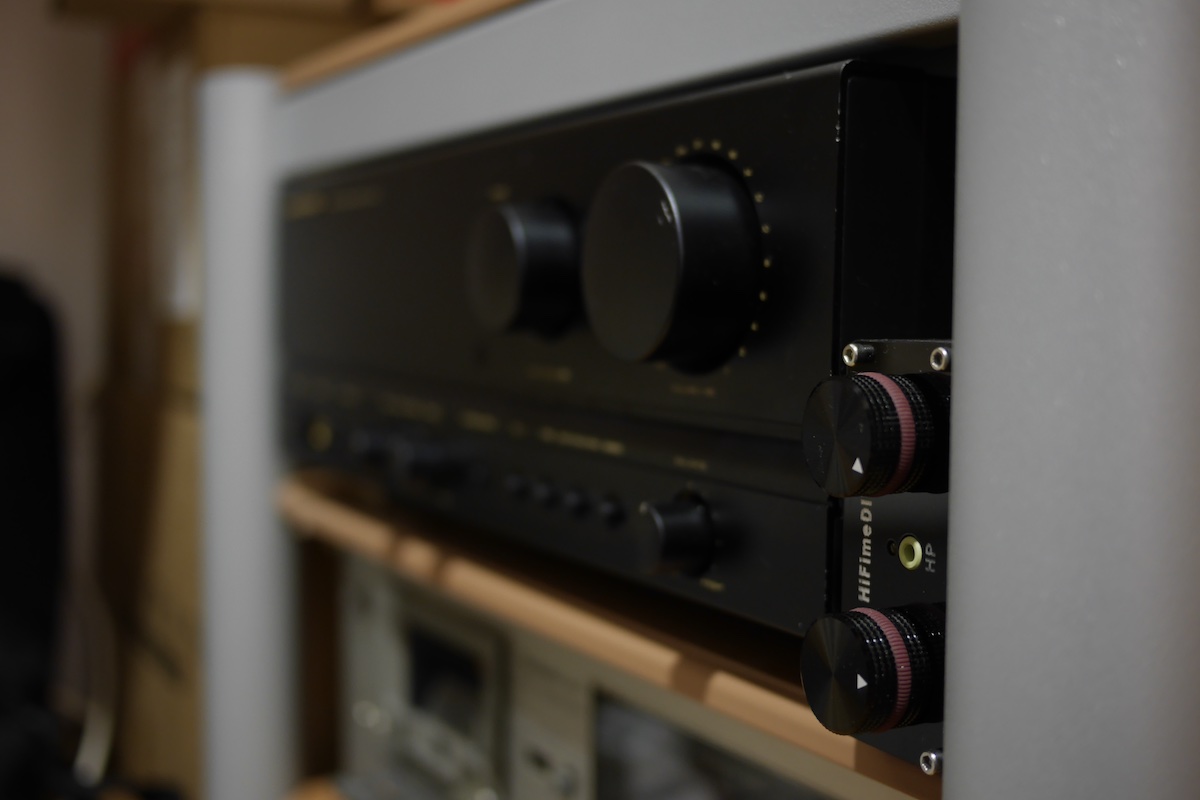
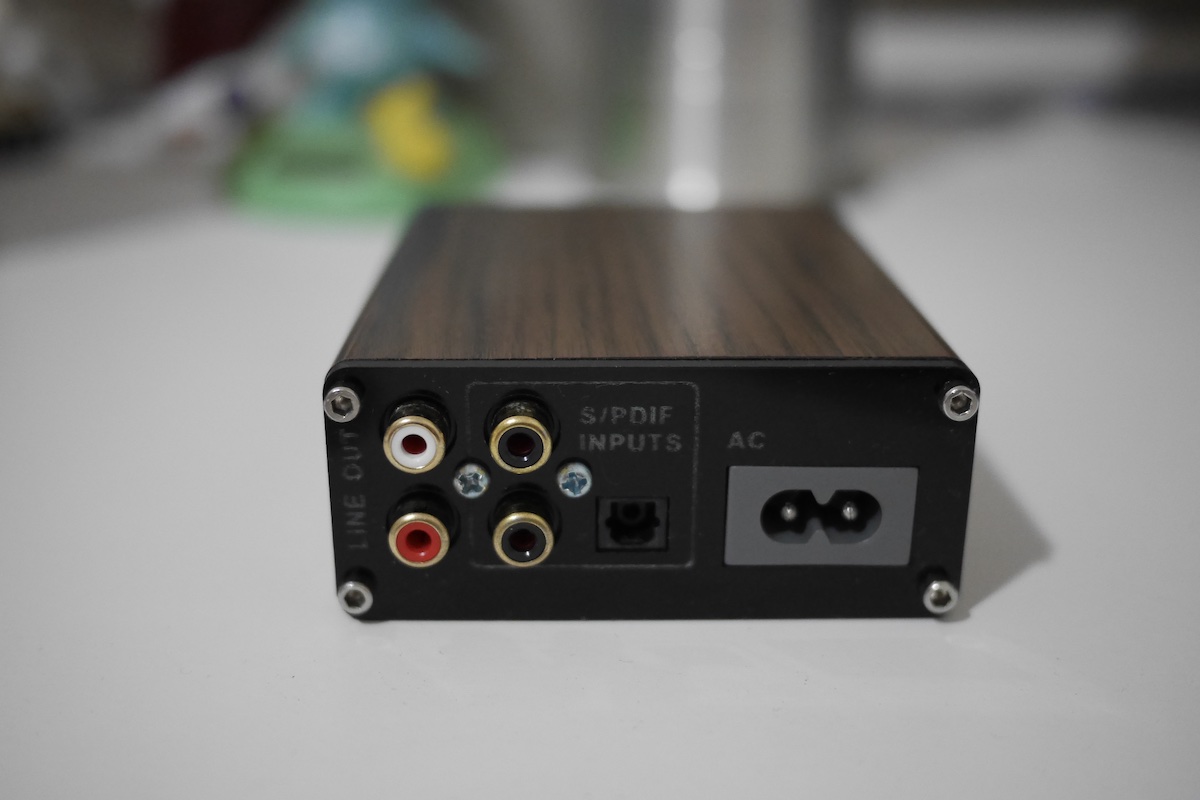
If you’re not looking to connect HDMI, or even don’t mind pure stereo, you can find a wealth of really powerful, sublime-sounding second-hand amps at junk stores or on eBay. I picked up a 100w Denon integrated stereo amplifier for under $200. I use a $100 HiFiMeDIY SPDIF DAC to connect one optical (a TV), and two coaxial (my PC and a Squeezebox music streamer) sources to it. There are also heaps of non-HDMI surround-sound receivers available second hand, too, if you don’t mind running a few extra optical/coaxial cables and missing out on some of the newer surround sound formats.
The HiFiMeDIY SPDIF DAC provides a cheap way to give digital connectivity to my early ’90s analogue amp.
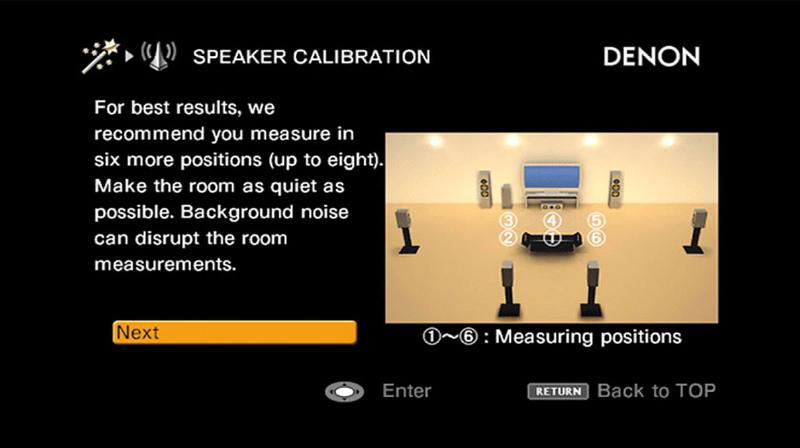
As far as extra features go, I’d also look for a receiver that includes a room-tuning (aka room compensation) capability via a plug-in microphone. A good room-tuner will make a fundamental difference to your sound. Denon do well at this, as do the Onkyo models that include Audyssey MultEQ (not their newer AccuEQ).
In-built speaker/room calibration is a worthy feature, and Denon provides one of the best on the market.
Other features worth considering include: wireless connectivity, such as Wi-Fi or Bluetooth; and compatibility with online and local streaming services, such as Pandora, Spotify, AirPlay, DLNA etc. Personally, I’m pretty happy to add in these features externally (via, say an AppleTV or Raspberry Pi), as that provides a little more flexibility over time (upgrading a component vs. upgrading an entire amp), but there is merit in having all-in-one convenience and control - especially as some receivers can automatically switch on when you connect to them from your phone.
The big takeaway from all of this is that you shouldn’t be afraid to buy incrementally – that is, start with a decent (but not necessarily high-end) receiver that accommodates your most desired features, and a set of good quality stereo speakers, later adding in extra speakers as your bank account restores and your upgrade itch becomes stronger.
Placement
If you’ve just spent over $1000 on a pair of floor-standing speakers, you’re wasting your money if you’re not going to position them correctly. And fancy that: I’ve written just such a guide here.