Thanks for taking the time to visit my site! It’s part portfolio, part live experiment as I rebuild my writing rhythm and explore topics outside (or adjacent to) my fifteen-year geospatial niche. Have a poke around — and if you’d like to talk, my details are at the bottom of this page.
Below is a short bio followed by some portfolio pieces I’m particularly proud of. If you want to learn even more about me, scroll on down for the longer version or have a click around the Showcase to see more of my work. You can also read my thoughts on AI further down this page.
- About Me (The Short Version)
- A few pieces I’m particularly proud of
- About Me (The Longer Version)
- Get in touch
About Me (The Short Version) #
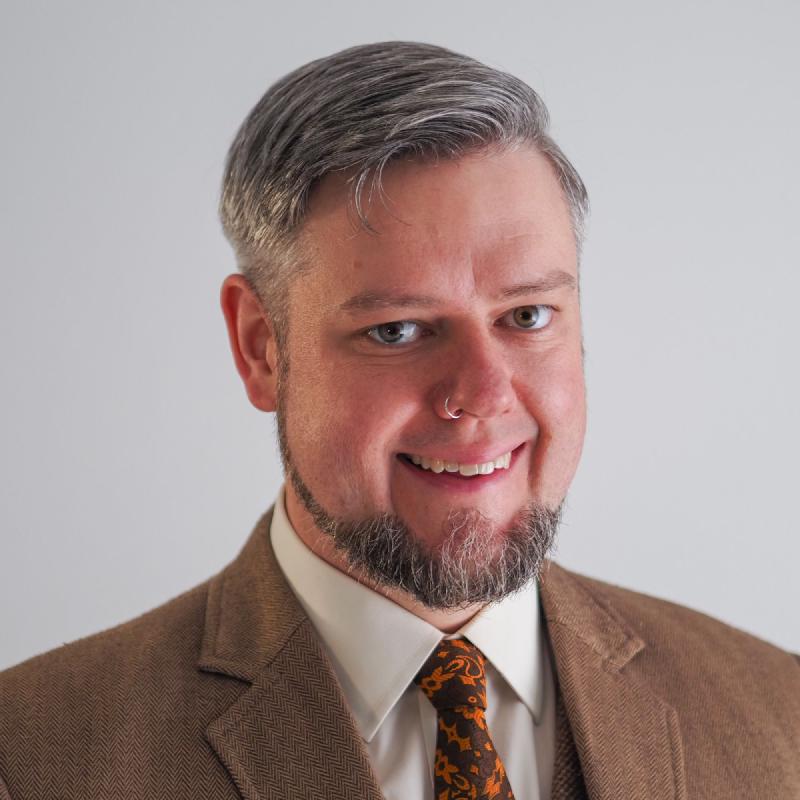
I’m Simon Chester — a writer, science communicator, and incurable (perhaps insufferable) music, science, photography, computer, and electronics nerd. I’ve spent the last fifteen-or-so years explaining complex things to people who don’t just want a “dumbed-down version” — which I happen to think is the most useful thing a communicator can do.
My favourite kind of writing takes the reader on a “knowledge journey” — starting with a hook, building up the foundations, then sliding in the complexity at the point where they’re curious enough that it sticks. I trust in the reader, and find that people come back when they find the content interesting, rewarding, and sincere.
I hold a Graduate Diploma in Science Communication from The University of Queensland (with a Dean’s Commendation awarded each full-time semester), and before that I earned a Bachelor of Science (a dual major in GIS and Resource & Environmental Management) from Macquarie University.
My writing career has wandered through rapid-fire mobile tech news, writing and copyediting Australia’s premier geospatial magazine (and newsletter), consumer tech news and reviews, travel features, ghost-written executive thought leadership, and an extended stint running a global geospatial standards organisation’s entire communications output.
I’m also a trained (and experienced) copyeditor, and possess the requisite attention to detail. As such, my writing is always well-received by editors and frequently praised as “fast and easy to work with.”
I’ve spent the past year at home with our two young kids while my wife focused on her career. I’m now back in the saddle again and looking for a role where the work is substantive: helpful, insightful, and explanatory as opposed to purely persuasive. I’d love for my next role to be in something I’m passionate about — science, sustainability, climate, equality, neurodiversity, photography — but I care more about doing impactful work (and doing it well) than ticking a sector box.
I’m based in Frome, Somerset, hold both British and Australian passports, and take far too many photos with my OM System cameras (at least that’s what my kids tell me).
A few pieces I’m particularly proud of #
- Jessie’s Journey: How a meme about a watermelon led one woman to an adult ADHD diagnosis through the NHS Right to Choose pathway, and what changed once she had it.
- Ground to Stand on: Why land degradation is as serious a threat as climate change, and how open data standards could help the world’s monitoring tools finally talk to each other. (GeoConnexion, 2023)
- Debunking HD Audio: Why 24-bit/192 kHz “HD” audio gives home listeners nothing over CD quality, explained from the sampling theorem up. (TechLife, 2013)
- A Strong Foundation for GeoAI Innovation: An interview with OGC’s Kyoung-Sook Kim on why AI in geospatial work needs open standards for sharing training data. (GeoConnexion, 2021)
- Chip Chat — April 2012: A geeky roundup of the world’s slowest lab experiment finally getting a webcam, Bond-worthy USB cufflinks, and a 3D printer that makes cupcakes. (APC, 2012)
- Cover Your Digital Footprints: A how-to guide to finding and shrinking your online trail, with escalating levels of paranoia from basic social media hygiene to Tor. (TechLife, 2013)
- Music Masterclass: HiFi on the Cheap: How cheap class-D “t-amps” and second-hand speakers can add up to a great-sounding stereo for a fraction of the usual price. (TechLife, 2014)
- Music File: Bandcamp: Why Bandcamp’s artist-direct model, lossless downloads, and discovery tools make it the music store independent music fans didn’t know they needed. (TechLife, 2013)
Or browse the full Showcase.
About Me (The Longer Version) #
If you’ve scrolled this far, thank you — here’s the verbose version. I trust you’ll forgive some repetition in the telling.
What I write #
I’ve written across a fairly wide spread of formats and registers — short and long, technical and consumer, in my own voice and in other people’s. The bulk of it has been long-form features and explainers (the OGC pieces in GeoConnexion International on the metaverse, marine spatial data, land degradation and the changing weather industry are good examples of taking a technical topic and building a navigable path through it).
Alongside those, I’ve written news items both slow and very fast, blog posts on a corporate editorial calendar, ghost-written thought leadership for executives, brochures and one-pagers, website copy, internal and external newsletters, social copy across most platforms, product reviews, how-to guides, and the occasional opinion piece when I’ve wanted to climb onto a soapbox.
I’ve also undertaken a mountain of copyediting and developmental editing — helping colleagues write articles, often by sitting with them (virtually or otherwise) to clarify what they want the piece to do, and how to best make it do it (or just editing the heck out of some very, very rough drafts…). Along with OGC’s Director of Marketing & Comms, I also co-developed and co-owned the editorial calendar, branding guidelines, and editorial style guides for OGC.
If there’s a thread through all of it, it’s that I aspire to write in a tone that’s clear, approachable, and informative without ever being manipulative. I aim for sincerity, factuality, clarity, and relatability, with the goal of engendering genuine trust in the reader. I am allergic to marketing hyperbole (I even have a doctor’s certificate to prove it).
How I got here #
From Mapping to Writing #
I grew up in Australia as a kid with questions. I wanted to know how everything worked — from my mum’s CD player and HiFi, to my dad’s cameras, and the family computer.
The “why/how does this work?” instinct drew me to a BSc at Macquarie University, where I majored in Geographic Information Science and Resource & Environmental Management (I wanted to know how the Earth worked), and then into a job…
…mapping bus routes across Sydney. It was as glamorous as it sounds.
Reading Bill Bryson’s A Short History of Nearly Everything during my undergrad seeded within me a desire to weave similar “edutaining” prose. Shortly after moving to Queensland, this inspiration aligned with fortune when I realised how much I enjoyed my girlfriend’s writing homework. She was doing a post-grad in Writing, Editing, and Publishing (WEP) at The University of Queensland, so I went and met the WEP course convenor, Prof. Roslyn Petelin. We got along very well, and she introduced me to Prof. Joan Leach, who was now running the Science Communication course that Ros had started (indeed, we got on similarly well).
So, for the next few years I was a GIS Officer at Brisbane City Council by day, and a SciComm student by night. They called me MapSciMan (not really).
My post-grad changed my life as much as it changed my perspective.
The course wasn’t just about simplifying science so that people can learn about it. Under Joan’s tutelage, I studied the philosophy of science, including how science is made — the human aspects (and elitism!) of scientific discoveries, progress, and institutes, how knowledge moves out into the world, how consensus (and trust) is built (and broken), and how all of that is perceived, ingested, and communicated, all while exploring the ethics and models of positive socio-technical change. Under Ros’ tutelage, I learnt the nuts n’ bolts of good writing and copyediting, and even included a unit on Writing For The Arts, which is where my consumer tech writing skills were learned.
I came out of my post-grad convinced that good explanation is less about dumbing down and more about working with and understanding stakeholders and subject-matter experts in order to create information pathways that readers actually want to walk down and which result in real engagement and understanding.
From there, writing quickly took over. While still enrolled in the course, my first paid writing gig was doing rapid-fire news for MobileCrunch (part of the TechCrunch network) at the giddy pace of five to ten posts per four-hour shift.
After moving back to Sydney, I worked for four years as the sole journalist and de facto assistant editor at Position Magazine, covering Australia and New Zealand’s spatial and surveying industries. I selected, sourced, researched, interviewed, wrote, illustrated, and copyedited every feature and news story in every issue. I also wrote, copyedited, and sent every issue of the associated Spatial Source newsletter, and handled their social media.
At the same time, I was freelancing for Future plc print and digital properties — including APC Magazine, TechLife Magazine, and TechRadar — reviewing audio gear and mobile apps, writing monthly how-to features for Android and HiFi enthusiasts alike, and a humorous nerd news column called “Chip Chat.” I also freelanced for various travel magazines (consumer and B2B), insurance company magazines, event websites, and more. You’ll be able to find a good chunk of this work in my portfolio.
From Australia to Britain #
In 2015 my wife and I made the move from Sydney to the UK, by way of a three-month overland trip across half the globe (please ask me about it!). I hit the UK in late 2015, and shortly after started as Communication Coordinator (later Communication Manager) at the Open Geospatial Consortium (OGC) — a global not-for-profit standards and R&D membership organisation — where I stayed for nine years. There I wrote and copyedited almost all of OGC’s public-facing content: blog posts, feature articles for the trade press, social posts and newsletters, ghost-written thought leadership for the executive team, two website rebuilds’ worth of copy, and most things in between — basically everything except their member-contributed standards docs and technical reports. I learnt how to work with subject-matter experts from very different backgrounds — academics, software engineers, hydrographers, mathematicians, government officials, CEOs, first-responders, the lot — and turn their expertise into something a non-expert could read and learn from.
From Career to House-husband — and back again #
I left OGC in early 2025 and took a deliberate year(+) out of work to be at home with our two kids while my wife pushed forward in her career. It was a useful break — proper time with the family, time to think hard about what I want next — and I’m now ready to get back to the writing.
Where I’d like to go next #
Two things I’m looking for in my next role: that the work itself is satisfying, and that I care about what I’m working on. I work best when I can see the impact that my work has.
On the work: I’m at my best when the brief is to develop something explanatory rather than overtly persuasive — taking a reader who’s curious, but not yet expert, and giving them something they actually want to know. I want to empower readers to make their own decisions regarding complex or difficult topics. Long-form features, explainers, primers, knowledge-base content, brand-and-content writing where the goal is to be useful first. I’m not keen to be purely a marketing copywriter and I won’t pretend otherwise. I’m also fully aware that I’m better at tactics than strategy — and I’m fine with that.
On the topics: After 15 years, I’m ready to step out of the broader geospatial and into something I’m more personally invested in: sustainability and climate, science communication and education, mental health and neurodiversity, equality and social impact — or anything where the writing is in service of helping people understand or do something useful. Photography and music are long-running passions so I’d happily write about either, even if their societal impact is arguably low. Charity-sector work, science publishing, public-interest journalism, technical advocacy — all of these are interesting to me.
Regarding practical matters: I’m based in Frome, Somerset, UK, so I require remote or part-remote arrangements. Full-time, part-time, and contract are all possibilities.
Me and AI #
Worth saying directly: all the copy on this site was written and edited by me. I’m a trained copyeditor, so the proofing is mine too.
That doesn’t mean I don’t use AI in my work (I do), but what I think is worth talking about is how and for what. I primarily use Anthropic’s Claude for ideation, research, summarisation, scaffolding, and pressure-testing my own arguments — though I have experience with ChatGPT and Gemini too.
Where I’ve commonly found AI weakest is at the thing that actually makes writing land: the specific, lived, human detail (and humour). For a previous job interview, I thought I’d see what an LLM could do when given a brief vs. what I would do. The difference between the two was stark: what came out of the LLM was structurally competent but missing a crucial human element. This is what inspired me to write “Jessie’s Journey”. The watermelon meme that opens that piece isn’t there because a model suggested it; it’s there because I talked to a real person about their lived experience. I genuinely believe that readers can feel the difference between a human’s touch and a machine’s.
So I treat AI as a useful collaborator for summarisation, ideation, new ideas (either suggesting or researching them), but I always* do the actual writing in my own voice. I’m putting active effort into improving my proficiency with Claude, on the principle that the better you understand a tool’s strengths and weaknesses, the more honestly and efficiently you can use it.
*In saying all that: there’s also a time and place for high-volume, short-lived writing, and AI excels at that when given the right prompts. Even though it requires judicious editing, it can be a huge time-saver.
You may have also noticed that there are some images (notably the Tasker How-To series) that use AI generated imagery. I find it much faster than opening GIMP and manipulating images based on stock photography - even if the results of the images do have a waft of the AI stench to them.
More than just writing #
Photography is a big interest of mine — a photographer for most of my life, I stepped up from point-and-shoots to Micro Four Thirds more than ten years ago. I try to take photos every weekend. I also spend perhaps a little too much time on Photography YouTube channels (though, to be fair, you could say the same about Science YouTube channels, too).
I remain captivated by scientific discovery, so regularly read ‘Pop Sci’ books and other non-fiction (frequently focused on history, equality, and sustainability). I also love science fiction (preferably “hard” style, but also others inc. Cli-Fi), historical fiction, some fantasy, some horror, and some unexpected curveballs. Some of my favourite authors include Neal Stephenson, Alastair Reynolds, Terry Pratchett, Ray Bradbury, Ian M. Banks, Becky Chambers, Ted Chiang, Benjamín Labatut, Carlo Rovelli, Yanis Varoufakis… and many more. Feel free to follow/stalk me on Goodreads.
I go bouldering at the local climbing gym when I can, go dancing as frequently as my family life allows, tinker with computers and electronics when I have a spare moment (I run my own server and a swathe of self-hosted services - including this website), and listen to a mostly indefensible breadth of music (ask me about any of it, and I may never stop talking).
I’m the dad of two small humans and the partner of one excellent one. As such, and above all, I try to be a fun and supportive husband to my wife and dad to my two kids (whose middle names are, regrettably for them, Android and Fusion. I stand by both choices).
Get in touch #
- Email: hiya@scc.fyi
- LinkedIn: linkedin.com/in/simon-chester