

You can put together a decent HiFi for almost nothing
We live in a crazy time. The falling cost of components from China, and the growing ease of access thanks to direct export websites like Ali Express, has meant that there are now countless super-cheap audio (and other) products available that – thanks to years of R&D trickling down – are able to compete with audio equipment that would have cost 10 times the price just 10 years ago.
At the heart of the cheap-but-decent audio revolution is the availability of tiny, low-power ’t-amps’ that perform well beyond what their price suggests. These amps are actually of the ‘class D’ variety, but use a specific amplifier chip designed by Tripath (thus the branded ’t’). These little guys blew the HiFi world away when they first appeared just under 10 years ago, and – since that time – they’ve continued to proliferate.
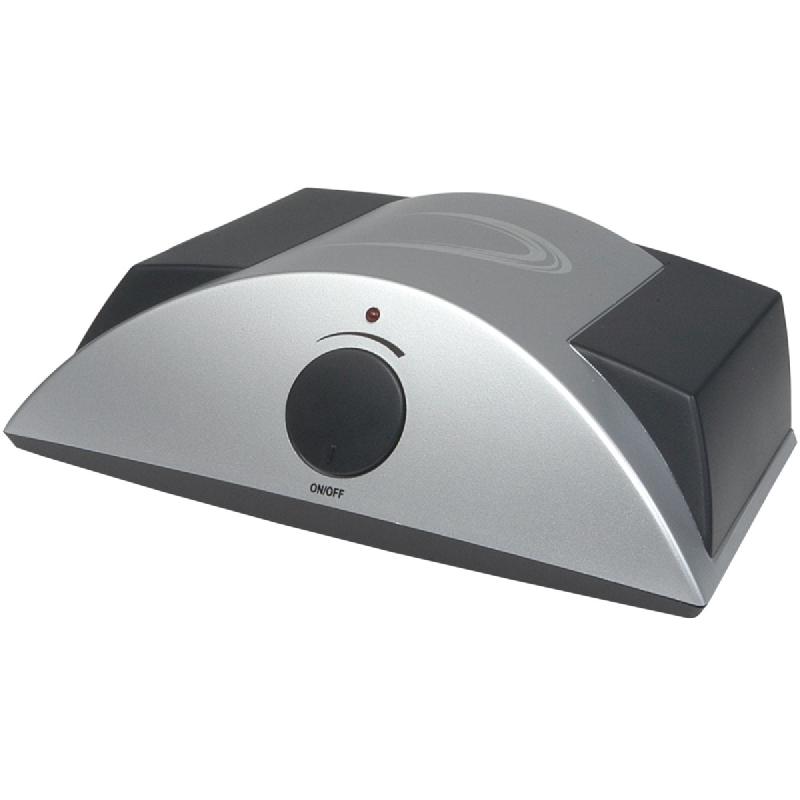
What this means for you is that it’s super simple to build up a decent-sounding hi-fi around this single, crazy-cheap component, for a fraction of the cost that this performance once demanded – just as long as you know what you’re looking for.
The first thing you need to consider when putting together a new system is the size of the room that you want to fill. Why? Because bigger rooms need bigger speakers, and bigger speakers need bigger amps. You can fill a bedroom with some bookshelf speakers with 4" cones attached to a 15w (RMS, not PMPO) amp, but if you’re looking to do loungeroom duties (and want to encourage impromptu loungeroom dance parties), you’ll probably want 5" or 6" speaker cones with at least 30w of power behind them. Of course, you’re always welcome (and encouraged) to step above these requirements, especially if you come across a second-hand bargain.
Speakers #
So, now that you have an idea of the rough speaker size that you’ll need for the room, you should first try your luck at finding a second-hand pair through eBay, Gumtree etc., or even a hi-fi forum. Most speakers will be 8 ohm, but the lower the number, the easier they will be to drive – and this will really make a difference when you plug them into a t-amp. You can pick up some stellar second-hand bargains for $50 and under, but I’ve found that most will sit around the $100-$150 mark. There’s no sense paying more than that for this application, and even $150 is generous.
When narrowing down what ones to purchase, look for signs of damage (dampness is a killer, so if the cabinet is swollen, go elsewhere), foam rot (the ring around the speaker cone), and – above all – have a listen to them, and don’t forget to turn it up! Some defects will only manifest themselves with loud bass notes.
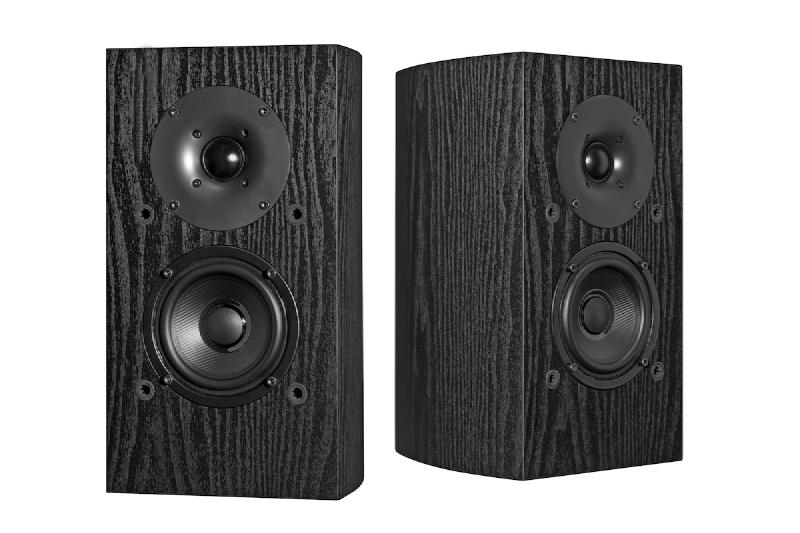
Alternatively, there are a few bargain-priced brand new speakers out there, including the $200 Pioneer SP-BS22-LR, which I’ve read some wonderful reviews of (although, I’ve never heard). Pop online to the various Hi-Fi forums out there (Audio Karma, StereoNET, What Hi-Fi, AV Science forum, etc.), and see what people are a) saying, and b) selling.
Amplifier #
Now, let’s pair those speakers with an amp. If you picked up a small set, or aren’t looking to strain your relationship with the neighbours, then you can try out one of the smallest (and cheapest) t-amps, such as those made by Lepai. Indeed, you can find a TA2020-powered (the Tripath amplifier chip that it is designed around) 20w number for as little as $15 on Ali Express.
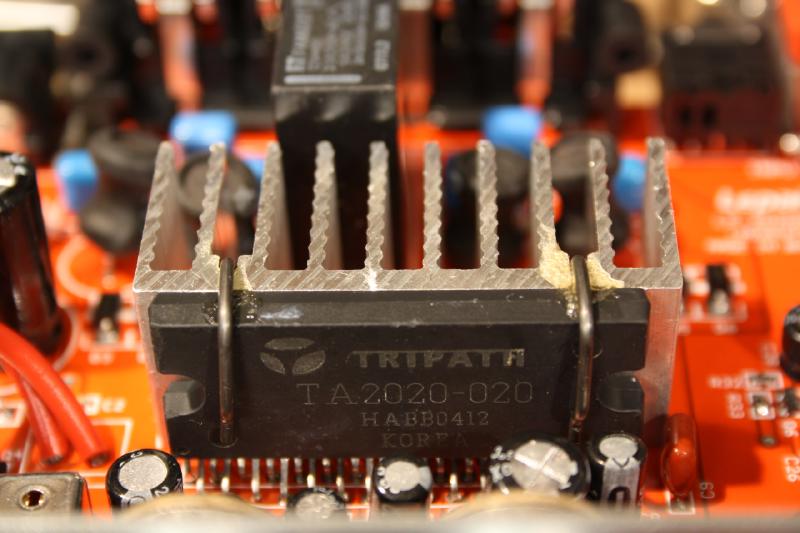
$15! I pay more for cables! Of course, these are as cheap as you would expect them to be, and if you can afford a step up to $40-$60, then you’ll get not only a little more power, but a better sound, too.
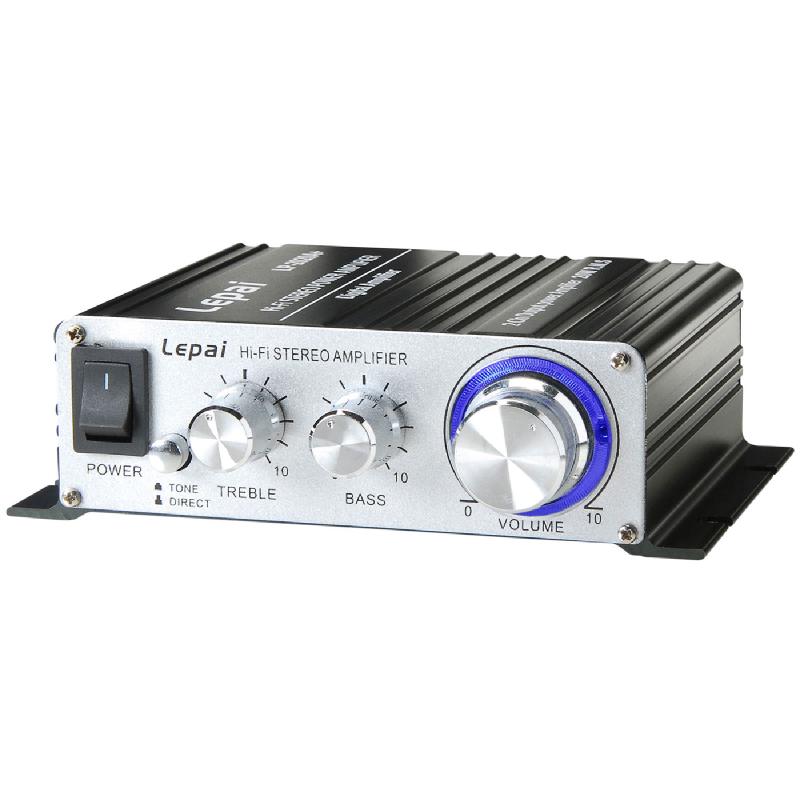
Still, if you’re looking to piece together just a little HiFi to sit on your veranda, then $15 is hard to pass up – especially as they can be run from an old car battery.
Stepping up through the ranks, you’ll find superior amps for about $40 from Muse or SMSL, or up a bit further to a Topping TP20 for about $60. These are all based on the TA2020 chips, so all put out the same 20w @ 4 Ohms – the difference is in the component quality, and you really do get what you pay for.
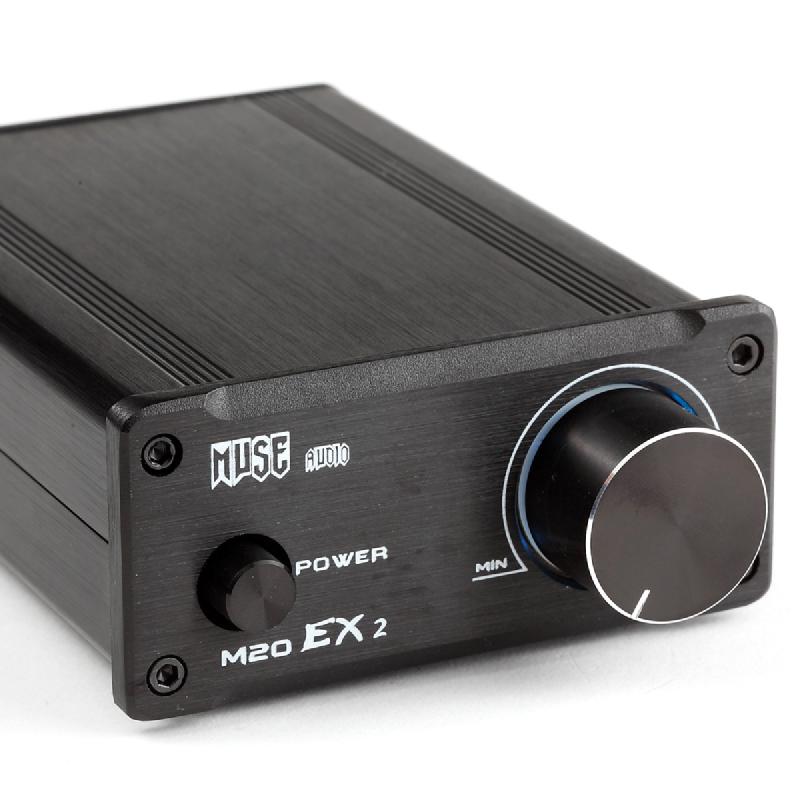
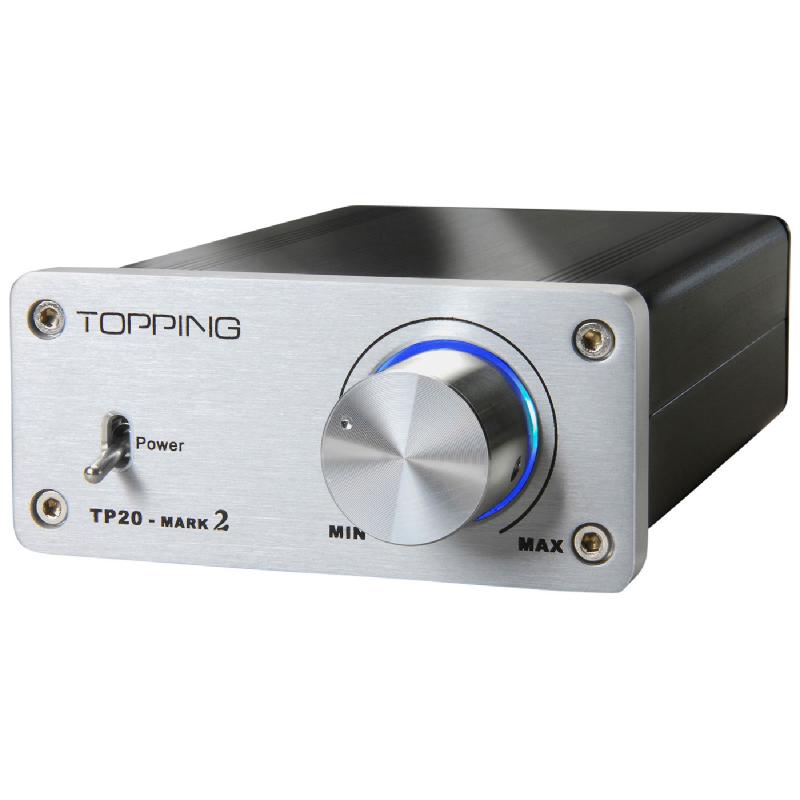
If you need to fill a larger room, or just have some larger speakers, there is also the 68w @ 4 Ohms Muse SA50 amp that is based on a different amplifier chip – the TDA7498L from ST Microelectronics – which I’ve seen for the same $60 as the Topping TP20.
While these are about 2-4 times the price of the Lepai, it’s still a bargain, and the extra effort put into the build quality will give you a better sound, and a longer-lasting product.
The source #
The final thing you need to consider in setting all this up is your audio source. All of the amps that I mentioned above only have 1x input – so you’ll want one that encompasses all of your music types. The ideal candidate here is a smartphone, as it can handle both local and streaming sources. Chances are that you have an old one lying around, too.
You can buy an iPhone line-out dock for less than $20, which will give you an unadulterated, line-level output from your handset, ready for amplification. This is one advantage that iPhones have over Androids: there are only a few that have docks with proper line outs.
Alternatively, Topping also offer some of their amps with digital inputs, in particular, the TP31 includes 1x analogue input, and 1x coaxial input, so you can have two sources (say, your computer and your phone), hooked up to the same amp. Note though that not all the digital amps have two inputs: the Topping TP32 has only a USB input available.
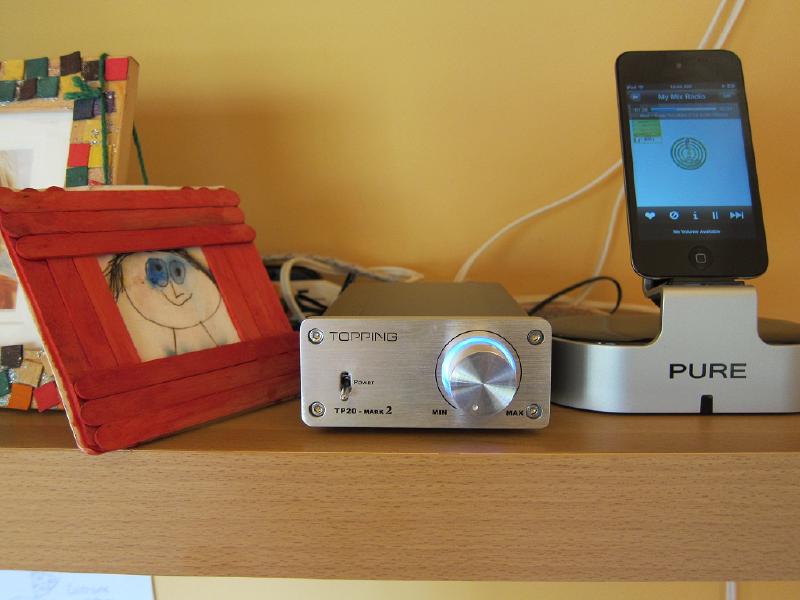
One thing to keep in mind during all of this, especially if you start to move up the t-amp path to greater wattages (and dollars), is that you can find some killer amps and sources second-hand for anywhere between $50-$150, which will sit at the same ‘dollar per watt’ ratio as even the cheap Lepai.