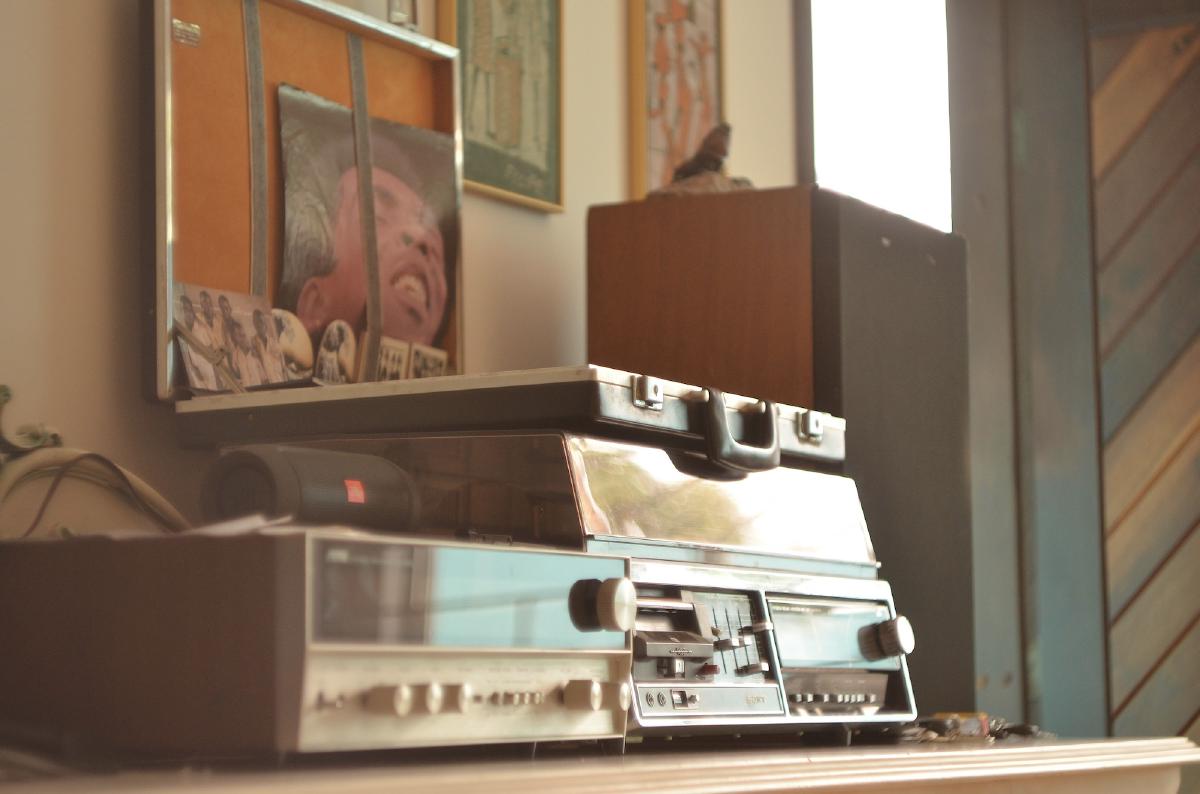


Second-hand Hi-Fi is a gold mine for price:performance.
Vintage. Retro. Classic. Second-hand. No matter what it’s called, old hi-fi equipment is a veritable cornucopia of bargains – if you know what to look for and where.
I’m going to assume, for the purpose of this guide, that you already have a source from which to play your music from – whether that’s a turntable, CD player, or music streaming device. If you’re going to invest in a decent hi-fi, however, do yourself a favour and get a source with a good-quality line out (ie, not your old phone).
As you already have a source, the first thing we’ll look at are amplifiers.
Choosing an amplifier #
Despite what the product brochures tell you, there haven’t been huge leaps in the field of amplification for some time. I’m not saying that the features of the amps haven’t changed (5.1, 7.1, digital inputs, newer amplifier operational classes, microphone-powered setup wizards etc), but the basic premise of taking a low-level signal, and making it powerful enough to drive speakers, was nailed a few decades ago.
One facet of amplification that has changed is the operational class of amplifier. Without going into too much detail: Class A amps offer the most accurate reproduction of the source signal (known as linearity), but are too energy inefficient (read: hot and expensive to run) for most applications, and very expensive to manufacture, so don’t really exist in the realm of hi-fi that you and I operate in; Class B amps run much more efficiently (cooler), but don’t do a great job of maintaining the accuracy of the source signal; Class AB amps are the compromise between the two, offering near-perfect linearity approaching Class A, and power efficiency nearer to Class B. Most vintage amps you come across will be some implementation of Class AB.
And then there’s Class D… theoretically 100% efficient (practically 80-90%), Class D amps can be tiny, and run from tiny power supplies, making them great for smaller, cheaper applications like all-in-one units, or in cars, where heat dissipation is important, but they also scale up to home theatre levels of operation. Erroneously called ‘digital’, this operational class uses semi-conductors, and operates similar to a switching power supply – switching thousands to millions of times a second. This can take a huge toll on linearity, and, as such, they caught a lot of flak when they first appeared. Semiconductor technology is only improving, however, and high-end, contemporary Class D amps can run with the best of the Class AB amps. They are the future of amplification – however, from a value perspective, an old Class AB amp can equal or outperform brand new Class D amps at 5 times the price.
And that’s why we’re looking at second-hand equipment, after all: value.
Want to know more about amplifier classes?
You can learn about amplifier classes, their design, and their inherent limitations at hi-fivision.com. There’s also a thorough, more technical explanation available at soundonsound.com.
But where should you look for retro hi-fi bargains?
You’ve probably noticed a number of shops out there – usually in the more expensive suburbs of town – that offer second-hand hi-fi equipment under their preferred ‘vintage’ or ‘classic’ monikers, but – while, admittedly, they usually come serviced and with short warranties – they charge a lot for it. Really. Heaps. In fact, I’ve seen amps in vintage shops selling for more than what they cost when they were new – these aren’t assets meant to go up in value. Now, while the wood finish on that old Pioneer may look sexy, and the sales attendant will tell you that it’s a rare model or that ’they don’t make ’em like this anymore’, curb that object lust and walk away – you’ll thank me later.
So, where can you look? Why, those goldmines of second-hand bargain bonanzas – gumtree, eBay, the Trading Post, Grays Online (they sometimes have hi-fi sales), garage sales, op shops, junk shops, hock shops, and hi-fi forums (although, don’t expect the bargains to be quite as good there, as the seller will know what they’re selling).
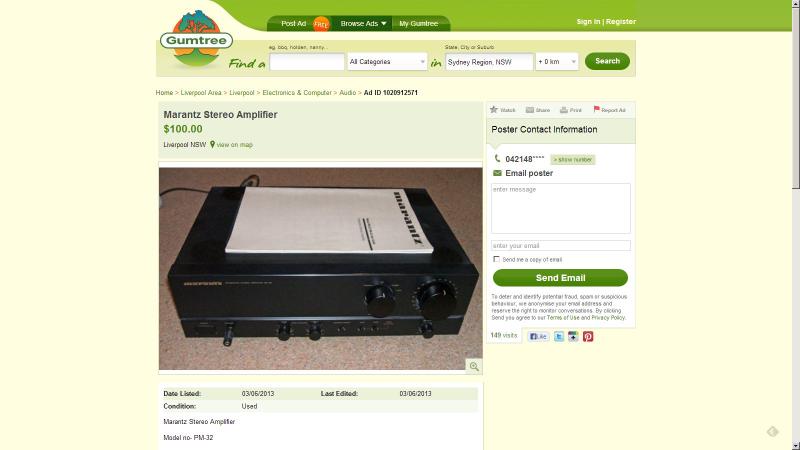
If you’ve searched for ‘amplifier’, or ‘amp’ online, you were doubtless greeted with a whole pile of confusing results. So, how do you sort the instant from the espresso? The following is a rough guide on what to look for.
First of all, I should tell you that I don’t do ‘surround’. My loungeroom is not set up for it – I don’t want speakers in a walkway – and I use my amp mainly for music. I also don’t want to pay for componentry in my amp that I’m not going to use – especially when it’s generally regarded that extra componentry can cause extra noise in the signal.
Let’s start with age. Most listings will mention the age, but why does it matter? I generally like to keep my hi-fi pre-digital (I hook up digital components using a high-quality DAC – but I’ll save that for another article), which translates roughly to the mid-nineties back. The argument here is the same as for surround systems – to keep the amount of componentry to a minimum.
Obviously, the older the equipment, the harder it is to find, so you’ll likely be looking at equipment from the mid-70s upward. I’ve had great experience with amps from the 80s (I have a Denon amp from 1981) and 90s (I have a Marantz from 1993), but I think that amps from the 70s often look better – wooden amps are worthy of display, with their VU meters and soft lighting. There are people out there that claim that amp design peaked in the early 70s, but I see the 80s and 90s as my preferred sweet-spot for performance, as the Class AB designs are a little more mature, and the components have a higher chance of being in better shape.
Wait; better shape? What do I mean by that? All things move toward their end, dear reader, and the same goes for amplifiers. Amps do wear out, and this is, unfortunately, one of the greatest risks of buying second-hand amplifiers. The Denon I mentioned above popped/banged/fizzled/stopped working mere weeks after I purchased it, and I was stuck with a $180 repair bill (from a reputable repairer). Thankfully, nothing was damaged when it died on me, but I was lucky; faults that damage your speakers, or irreparably damage your amp, are possible. As such, I’d recommend finding a good amplifier service/repair person in your area, and having your new amp serviced. It, obviously, adds to the purchase cost, but can save you costs in the future, and can even improve the performance of your amp. Ask around on hi-fi forums for any recommended repairers in your area.
Next up to consider is brand. Often, the quality of a brand is tied to its age – for example, late model Onkyos, Denons, Marantz’, et al are regarded as less well-made as the older ones manufactured in Japan. So, if you find an amp by one of these manufacturers, and it’s from the late 80s/early 90s or older, you’re probably in good hands (you can always check the ‘Made in’ sticker). Other manufacturers worth looking at include: Rotel, NAD, Cambridge Audio, Sansui, Luxman, Quad, Pioneer, Akai, Yamaha, Sony, B&O, and Kenwood.
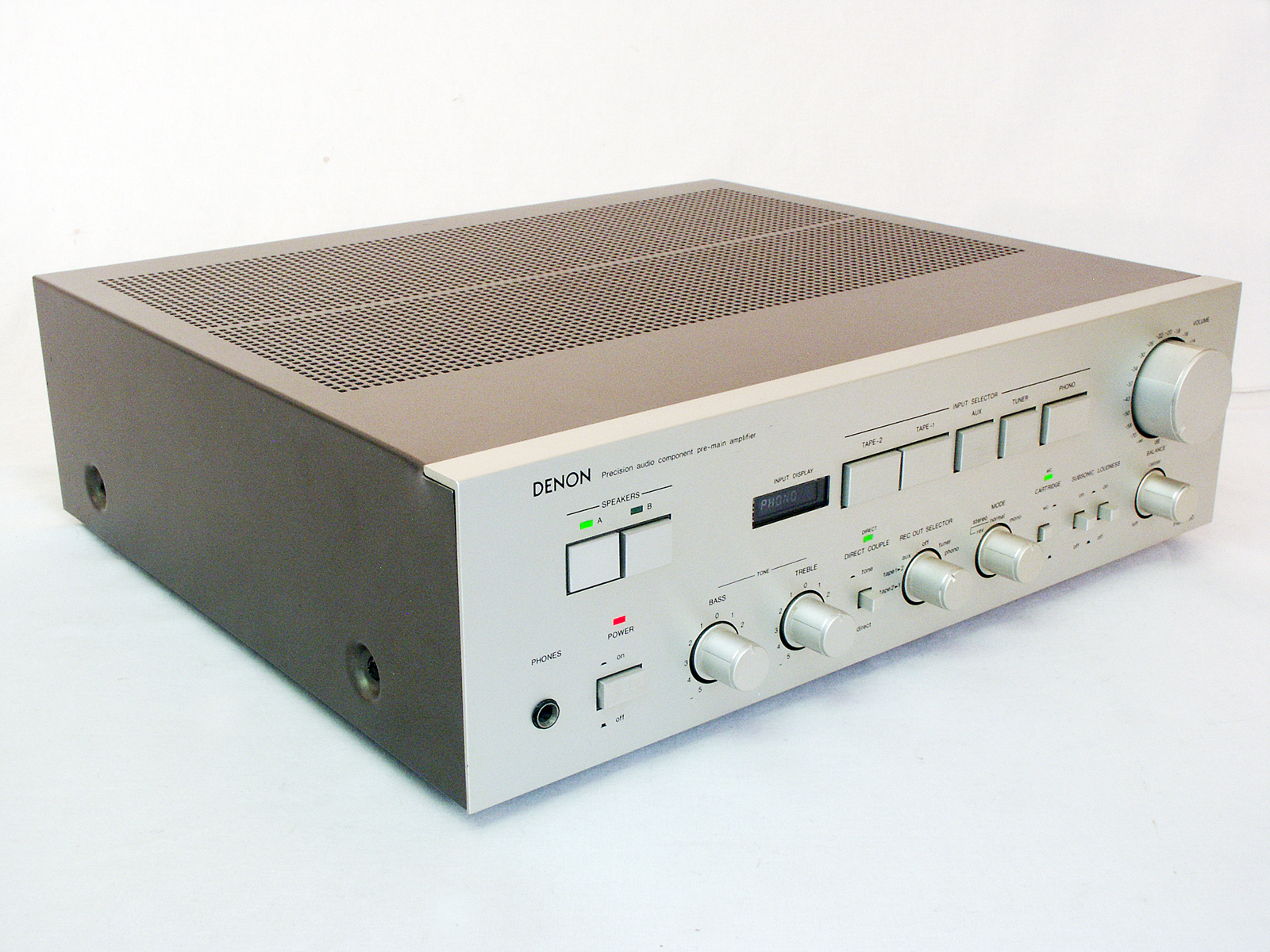
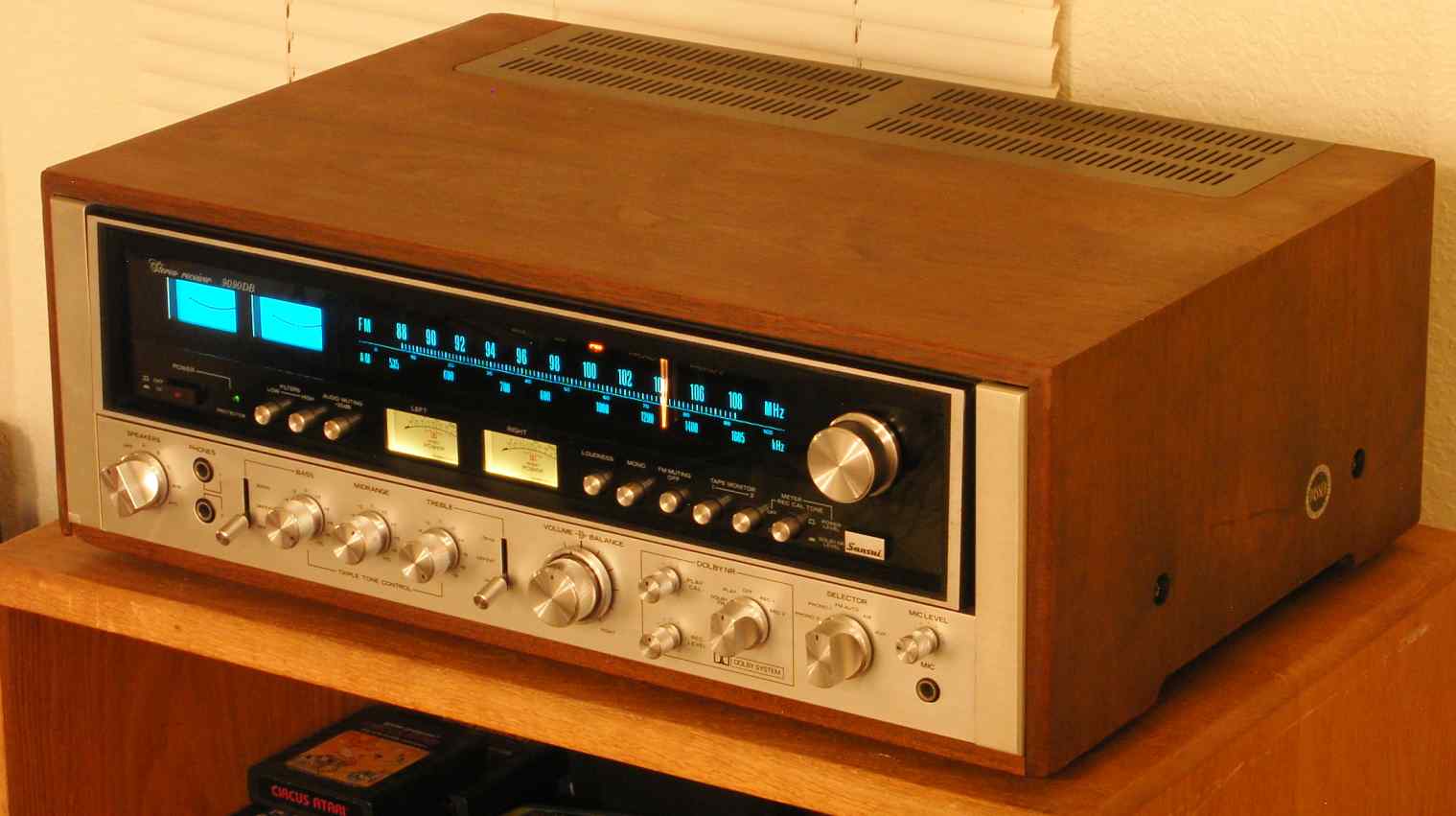
1980s amplifiers have a vastly different style to amplifiers from the 1970s. (Sansui image: CC BY-SA 3.0 Aaron Brick)
If the model number is included in the listing, do a Google search for it. Chances are that there is an entry for it at audio-database.com [Ed: last updated 2023], where you’ll be able to dig up specs. There are probably people posting to audio forums asking about it, too, so you can hear opinions on the model from both those who owned them from new, and second-hand buyers alike.
Armed with a fistful of specs, what should you be looking for?
The most obvious detail is power, measured in watts. This determines not only how loud the amp can go, and the size of speakers it can drive, but also the quality of sound – mainly bass – at lower volumes. A good rule to stick to? The bigger the better. However, a 60w amp from a great manufacturer, say Rotel or NAD is more preferable to a 100w from a good one, say a late Pioneer. If you’re going to drive bookshelf speakers, 60w will be adequate, but if you want to drive floorstanding speakers, or would consider driving them in the future, 80-100w will serve you better.
The output, in watts, of amps are usually measured across a load of either 8 or 4 ohms – make sure you’re comparing wattages measured across the same resistance, so that you can more closely compare amp specs. However, there is much more than just wattage coming into play when comparing amps, so this isn’t a definitive measurement. For a better idea on the various specs of an amp, and how they can be fudged to look better, visit rayfes.com/caraudio/ampspec.php - it’s written for car stereos, but is just as relevant for hi-fi, and can help you make sense of a page of specs.
You also need to look for suitable inputs. If you’re going to buy a turntable, you’ll need a ‘phono’ input, as only newer turntables output their audio at line-level. If you have your heart set on an amp that doesn’t have a phono input, however, you can buy an external phono preamp – I’d recommend getting one from phonopreamps.com, as they are well priced (around US$60 inc shipping) and well made (if ugly). One advantage of an external phono pre-amp is that it allows you to hook your turntable up to your PC for digitising. But, I digress.
Now, how much should you pay? This is hard to say, but you should only pay what you’re comfortable paying. For instance, I paid about $230 for my Marantz from 1993. I’m happy with that price, but I saw the same model last week for $100 on Gumtree. So, set yourself a budget, arrange your results by price, and just start looking for what you think offers the best value. Who knows what bargains await?
This leads me nicely to the next part of our hi-fi purchasing party – choosing some speakers.
Choosing speakers #
I’ve found that many speakers listed online won’t have the specs you need written in the listings, so, hopefully, there’ll be a photo of a label. If not, ask them to tell you the speaker’s rating (in watts) and impedance (in ohms). These figures tell you what type of amp to match them to.
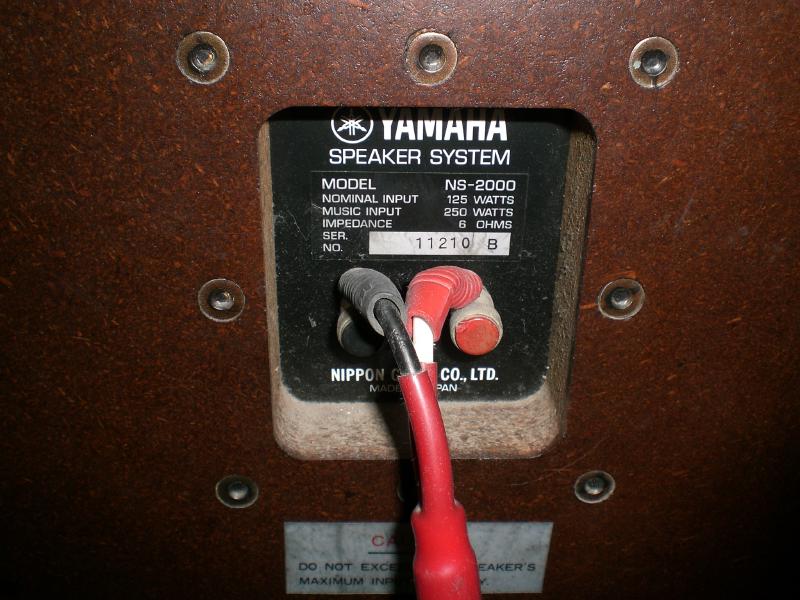
Now, it’s really important that you match your speakers to a suitable amp, as the wrong speakers can permanently damage your amp, rather than the other way around. You must not plug an underpowered amp into power-thirsty speakers. Plugging a speaker rated for 80w into a 100w amp is much more preferable than plugging it into a 40w amp. Most speakers will come with a range of acceptable values, however, so just try and stick within them. If your amp output is greater than the range, just refrain from turning it up too loud.
Ideally, you want speakers with the same input resistance as the output resistance of your amp. Notably, you must not run speakers with impedance lower than what your amp is rated for, as this will damage your amp. Some amps are quite picky with the resistance of connected speakers, requiring speakers with a specific resistance – usually 8 ohms. These will be noted on the back of the amp, so make sure you read any labels on the rear before plugging anything in. For more on impedance matching, see this 1994 (!) article from Sound On Sound Magazine.
If you’re heading out to purchase second-hand speakers, ask if you can listen to them before you buy them. They’ll sound a little different when paired with your amp back home, but it’s enough to get an idea of their quality – if they sound terrible, then chances are they’ll still sound terrible when you get them home.
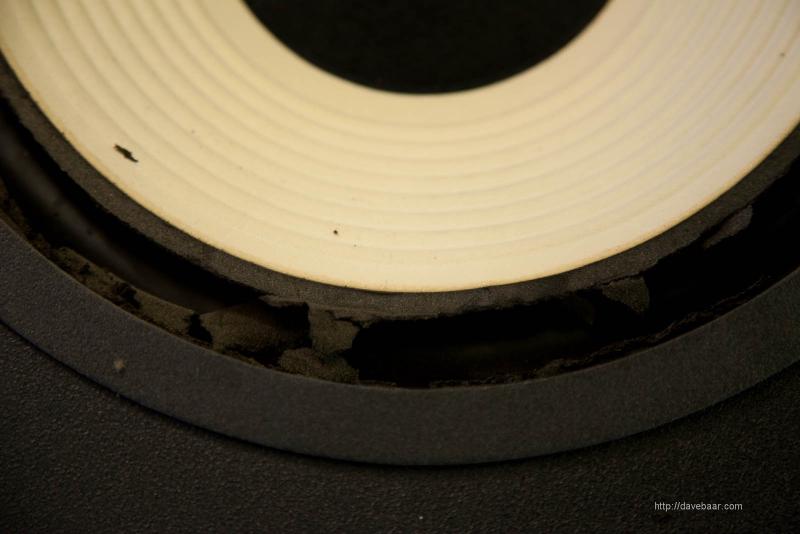
You should also take the grills off and look for the condition of the foam surrounding the cones. If the speakers are of particularly good pedigree, and are particularly well-priced, it is possible to replace rotten foam yourself, but it’s usually not worth the hassle. A guide to loudspeaker repair is available on Instructables.
There are even more brands of speakers than there are amps, so – rather than recommend any particular brand over another – you should Google the make and model of the speakers in question, and see if you can find any forums with info on them. Or else join a hi-fi forum and enquire there directly.
Again, how much you pay varies widely between models and sellers. You can scoop up some bargain bookshelf speakers for around $20-$50 from casual sellers, but expect from around $100-$200 from experienced sellers with better models. Floor standing or tower speakers generally go for more, but you probably won’t have to pay more than $300-$400 for a really good pair. Considering that good floor standing speakers start at around $1000, this is a good deal.
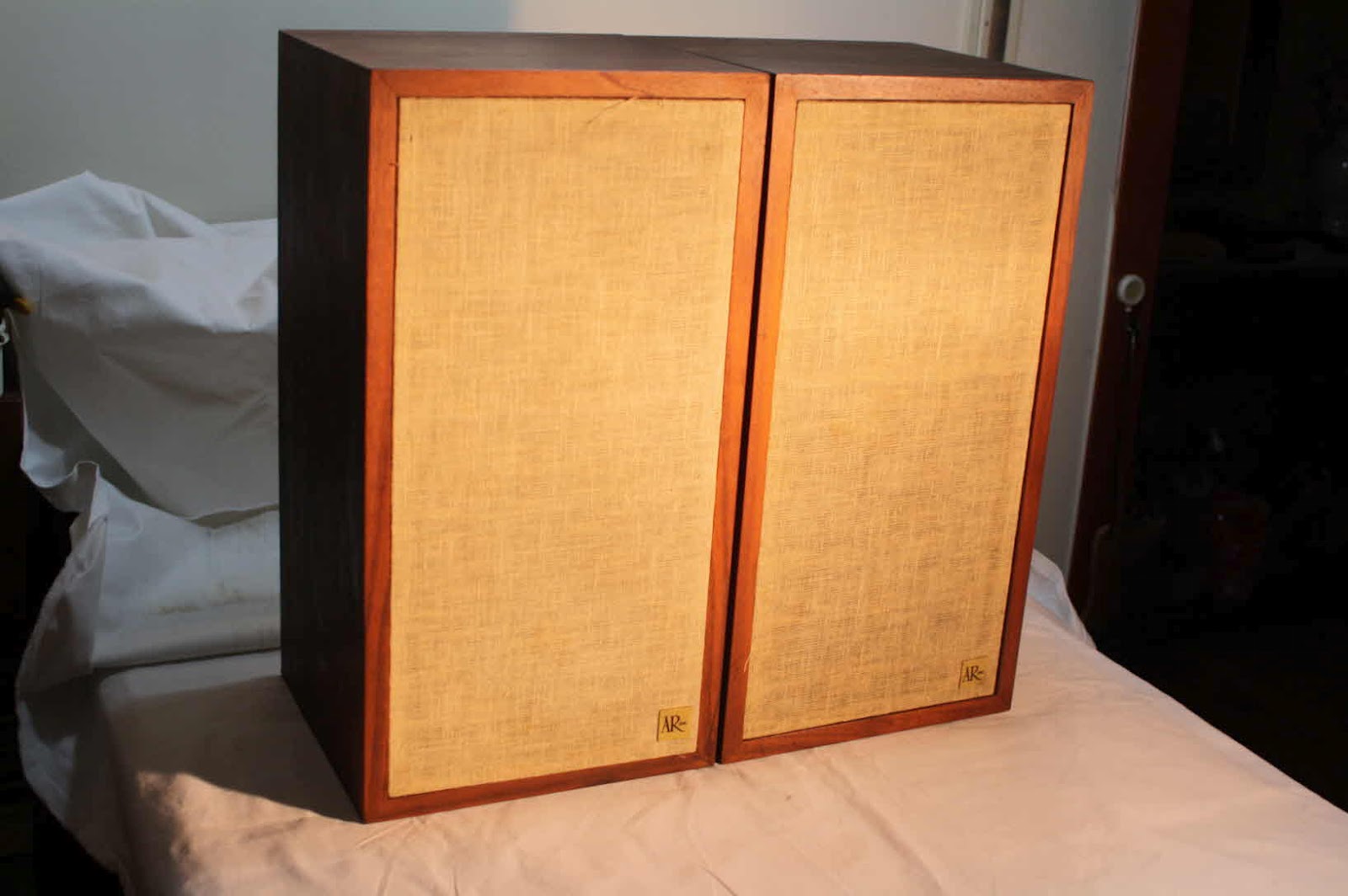
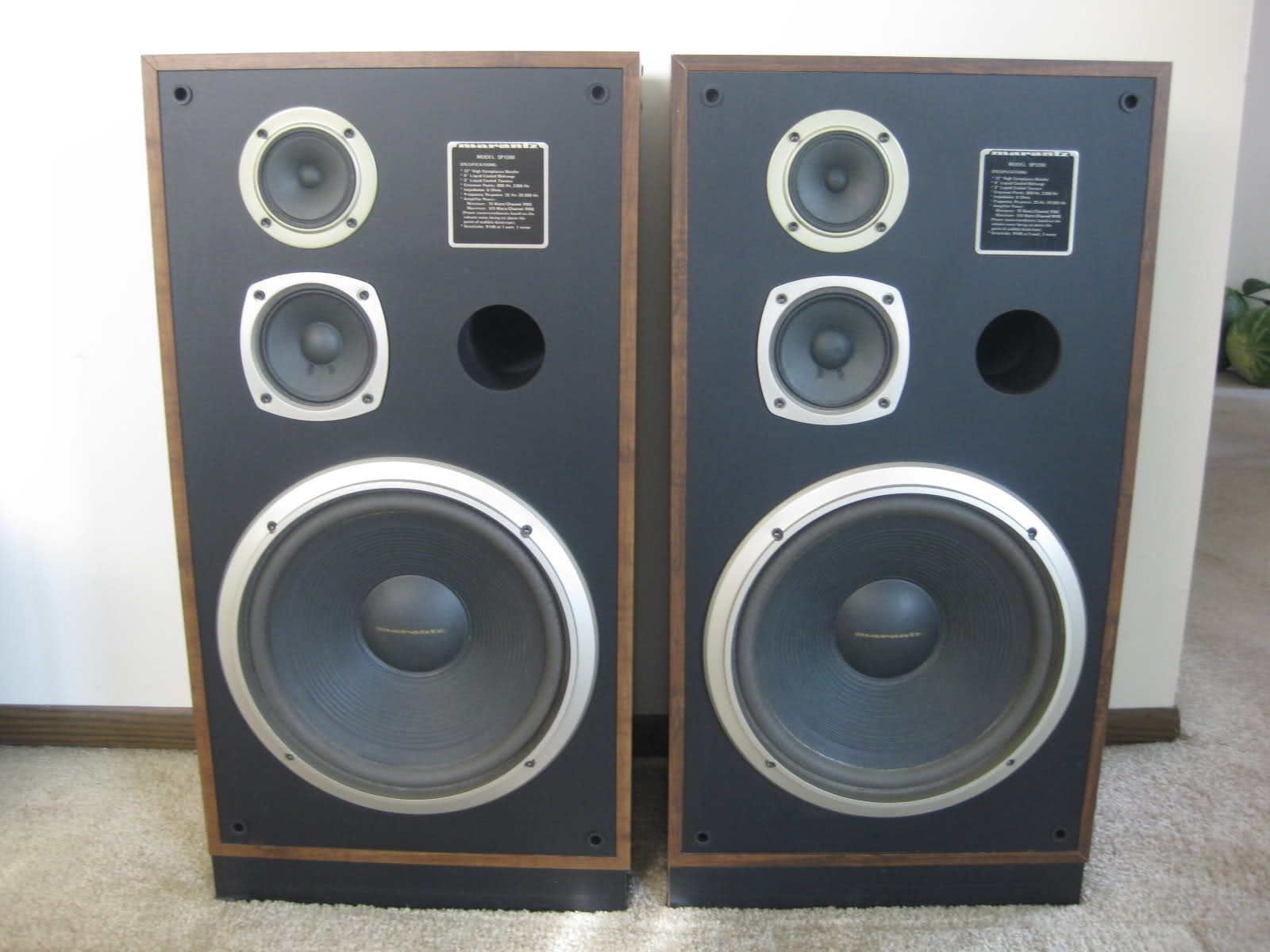
Bookshelf speakers will usually cost less, as well as take up less room, but if you want to fill a large room with music, floorstanding speakers are the way to go.
To hook your new (old) speakers up to your new (old) amp, you’re going to need speaker wire. Look at the terminals on the back of both your amp and your speakers. You generally have only a few choices with connecting speaker wire: pin connectors, spade lugs, banana plugs, or bare wire. Generally, everything accepts bare wire, but it’s a little easier to connect plugs, lugs, or connectors than it is to clip or screw in bare wire. I don’t really think there’s a noticeable difference in your method of connection, but purists will say that bare wire is best, and I’m happy to oblige. There isn’t much to look for in speaker wire – and it’s not really worth buying second-hand, as the metals inside are prone to corrosion, and new stuff is just so cheap. Don’t fall for the marketing hype of expensive stuff – it’s not that hard to transfer a signal across wire – just go down to Jaycar, or even eBay, and buy a length of 16 gauge (AWG) wire. You shouldn’t have to pay more than a few dollars per metre for the good stuff. The shorter the length the better, however, if you have to run it more than 15m, opt for 14 AWG wire. You can learn a bit more about speaker wire from our good friend, Wiki P.
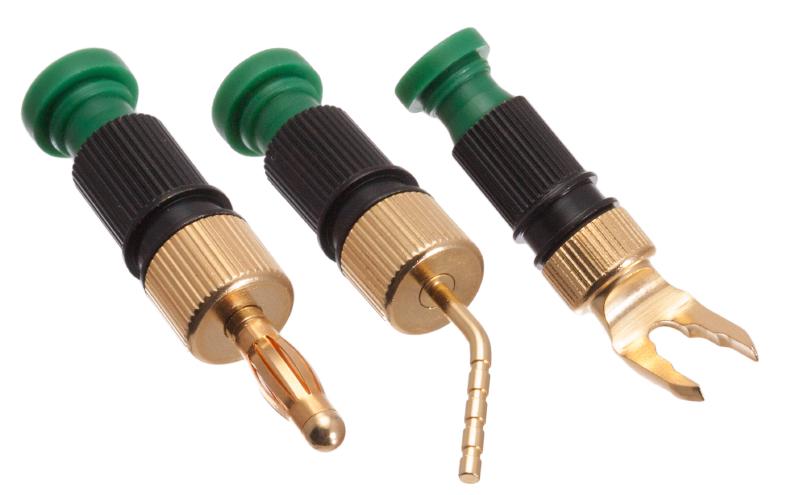
Speaking of marketing bollocks surrounding speaker wire, there is even more bollocks surrounding cables for connecting equipment. The only thing you really need be concerned about is the gauge of the cable, and the finish of the connector. I buy semi-premium cables because they look pretty, but cables of the same gauge of wire are all much the same. Just stay away from the cheapest, and you’ll do fine. I don’t pay more than $15-$20 for a cable, and even that’s a bit generous.
And, for the love of fidelity, don’t ever, ever buy Monster cables – they exist purely to increase the margins in hi-fi packages.
Now, it’s just a matter of hooking it all up, adding your source, and finding a comfortable listening chair.
Asking for help
Hifi forums are a great place to ask those in the know about the quality of any amps/speakers that you’ve found. They’re also a good place to learn some general principles on hi-fi and hi-fi equipment – but be sure to read critically, and take everything with a pinch of salt. Some of the more popular audio forums include: hydrogenaudio.org, avforums.com, and stereonet.com (a handy place to find local repairers and sellers across Australia).