

Improve your TV’s sound, without the bulk of a real hifi
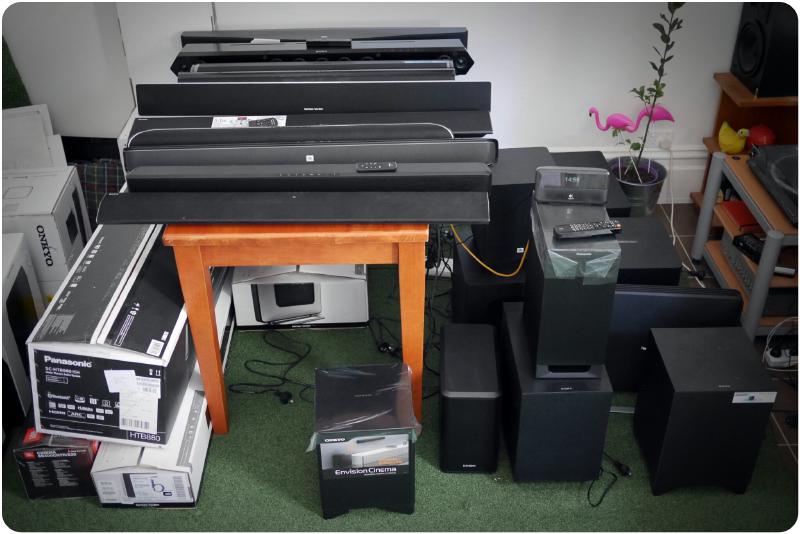
Looking around any big box retailer over the last few years, it’s become quite clear that sound bars are going gangbusters. While I’ve previously discussed that, for sonic fidelity, you’re really much better off spending your money on an A/V receiver and separate speakers, the merit of sound bars lies in their minimal footprint (and aesthetics - although, not all of them), and their simplicity in set up and operation.
This makes them especially useful for a second TV – where you’re not interested in investing in the best quality sound, but want to improve on the in-built shrillness – or for those with serious (dare I say terminal) space or aesthetic considerations.
However, despite my general disinterest, in the course of this round-up I must admit that a few models really took me by surprise in their sonic refinement (albeit at a premium over equivalent conventional speakers) and bravado (with certain units maintaining fidelity even at dance-floor volumes), and I was certainly enlightened in why (almost) all-in-one simplicity is so appealing.
So, in recognising their popularity, I’ve gathered up a list of the most sonically promising sound bars, suitable for both movies and music, and ranked them from my favourite to my un-recommendable.
Before we dive into my reviews, here’s some useful information on what all the specs mean:
- Speaker power: I opted to leave power ratings off of the spec sheets this year. In part because there is no consistency between manufacturers – some cheat by rating it at 10% total harmonic distortion (THD), others combine the sub ratings with the speakers, etc. – but mainly because I found no correlation between power output and sound quality. More so, there wasn’t a single unit reviewed that I wished could go louder, so you can consider all power ratings as ‘ample,’ and concern yourself with the actual review.
- HD Audio: Some sound bars, as noted in the specs sheets, support HD audio. Regular readers would know by now that I don’t get down with HD, but – even if I could ignore all the technical realities of sound compression and believed that HD created a noticeable difference – I really doubt that the speakers contained in any sound bar would be able to provide the nuance required to notice the supra-aural effects that those extra bits are producing. In short, don’t let it sway your decision.
- ARC explained: Audio Return Channel forms part of the HDMI v1.4 specification, and it allows audio to travel back down the HDMI cable, basically allowing a device to provide video to the TV, but also accept audio from it. Without ARC, you would need one cable running to your TV for video, then another (most likely optical) running from the TV back to the sound bar (or A/V processor/amplifier). Additionally, by running all of your peripherals through your sound bar, you can receive on-screen feedback from commands, such as what surround mode you just selected.
- CEC: Consumer Electronics Control allows HDMI devices to be able to control other HDMI devices. So those sound bars marked as having CEC allow you to use just one remote to turn on the TV, sound bar, and often play/pause etc. your Blu-ray player, too.
- NFC: Near Field Communication has myriad uses, but in this context all it does is make pairing your smartphone’s Bluetooth a little faster.
And a note on syncing your audio: When watching movies through your sound bar, you may just notice that the lips aren’t moving in sync with the sound. Thankfully, just about every sound bar on the market allows you to adjust the delay, so that you can make sure they sync up again. Consult your manual to find out how to fix this annoying problem.
But enough preamble, let’s take a look at the results.
Sony HT-CT770 #
Punches well above its weight.
Score: 5 | Price: $599 | Web: store.sony.com.au/archived-soundbar/HTCT770.html
Critical specs: 4x unspecified drivers in bar + 6" wireless sub, 3x HDMI + 1x HDMI audio return channel (ARC), 1x optical, 1x 3.5mm (analog), Bluetooth with NFC, 4K pass-through, textual display, wall mountable.
This unit ticks all the boxes: it’s unobtrusive and good looking, it provides great sound (besting units costing hundreds more), ample inputs, and it’s one of the cheapest units I reviewed. The display hides behind the cloth grille, but is easily viewable and descriptive. It even comes with a full-featured remote control with real buttons (this pleased me perhaps more than it should have). Also, the sound modes (Standard, Movie, Game, Music, P.Audio, Sports, Clear Audio+) were actually beneficial, whereas on other bars they mainly just added reverb and destroyed the music.
At this price, you’d be mad to consider anything else.
Yamaha YSP-2500 #
Sound projection offers an alternative to rear speakers
Score: 5 | Price: $999 | Web: uk.yamaha.com/en/audio/home-audio/products/sound-bar/ysp-2500/
Critical specs: 16x 1" drivers in bar, 2x 4" drivers in wireless subwoofer, 3x HDMI + 1x ARC with CEC, 2x optical, 1x coaxial, 1x RCA (analog), Bluetooth with Apt-X, 4K pass-through, HD audio, room calibration.
The most notable feature of this sound bar, aside from its physical heft (a good sign of quality), is that it uses the shape of your room to bounce surround sounds so that they come from behind you. Like dedicated A/V receivers, you run a calibration routine at set up using an included mic, and it figures out how your room affects the sound. It’s very clever, and produces good results in movies with surround sound.
Critically (for me at least) the unit performs incredibly well when it comes to music, providing sound that bested the cheaper Sony, and came very close to the more expensive units costing hundreds more. It also comes with a plethora of inputs, and is as close as a sound bar can get to an actual A/V receiver. It even comes with a smartphone app for fine-tuning of settings, if you find that the (full-featured, and with actual buttons!) remote cumbersome.
On another note, it’s the only model that allows you to connect the subwoofer using a cable – which is great news because wireless subs play havoc with my Wi-Fi.
Sony HT-ST7 #
You can get a real hi-fi for this price, but this sound bar can’t be faulted
Score: 4.5 | Price: $1399 | Web: store.sony.com.au/archived-soundbar/HTST7.html
Critical specs: 7x 2" + 2x 0.75" drivers in bar + 7" wireless subwoofer, 3x HDMI + 1x ARC with CEC, 2x optical, 1x coaxial, 1x 3.5mm, Bluetooth with NFC and Apt-X, HD audio, 4K pass-through, iOS + Android App, IR repeater, wall mountable, OSD on front.
Every time I compared the output of any other sub-$1000 sound bar (with the exception of the $999 Yamaha YSP-2500) to the sound pumping out of this unit, I was left embarrassed for the competitor. It wasn’t until I heard its full sound that I realised how much mid-range is missing from just about every sound bar out there. In fact, each of the $1000+ sound bars (with the exception of the slim-line Harman/Kardon SB 35) brought a mid-range that everything below lacked; providing a real alternative to actual speakers.
This Sony, while it was sonically bested (only by a fraction) by the Jamo Torsten, remains my pick of the premium lot, simply because it comes with a textual display, a wealth of inputs, a funky (but practical) remote with real buttons (you’ll see that this is a recurring theme for me), a ‘premium’ feel, and sound modes that don’t suck. Oh, and it goes party loud without distorting.
Jamo Torsten #
Incredible sound, shame about the features + price
Score: 4 | Price: $1499 | Web: [Ed: no longer online]
Critical specs: 2x 0.75" + 4x 3" drivers in bar + 10" wireless subwoofer, 1x optical, 1x RCA (analog), Bluetooth with NFC, wall mountable.
This unit wins the award for best sound of the bunch. The sounds were smooth and full, and just a little clearer and more present than on the Sony. As an added bonus, it goes really loud without distorting.
However, it appears that the engineers sunk their entire budget into sonics, as feature-wise, it’s as sparse as they come. There is no sound adjustment possible, except for turning 360 (surround mode) on or off, meaning that you have to manually adjust the knob on the rear of the sub which is a tremendous pain in the figurative when you switch from a movie to music. The remote is of that terrible button-less, blister-like type, and the display consists of a colour-coded LED. It does include Bluetooth, but no HDMI, no coaxial, and only 1x optical, and 1x analog RCA connector.
At $1499, it’s a tough recommendation – unless you’re seriously space starved, you’d be better off buying a $600 amp and $900 speakers.
Onkyo LSB-50 #
Great sound, but loses out to a clunky interface
Score: 4 | Price: $799 | Web: [Ed: no longer online]
Critical specs: 6x 2.75" + 2x 1" drivers in bar + 6" wireless subwoofer, 1x Optical, 1x Coaxial, 1x 3.5mm, USB playback, Bluetooth, IR repeater, wall mountable.
Sound-wise, this unit is my second favourite of the sub-$1000 units, behind the Yamaha YSP-2500, and just in front of the Sony HT-CT770. The sound was clear, spacious, and not too echoey (a signature of small speakers and cabinets), and it goes really loud while maintaining clear and deep bass, and not becoming too shrill.
However, I can’t award it top points thanks to: a frustrating interface (there is no textual display – only lights); its terrible sound modes (the only sound mode worth using is ‘movie’ - even with music); its lack of HDMI (optical/coaxial is perfectly fine, but it appeals to some); and the fact that it’s $200 greater than the Sony, with only a negligible improvement in sonics.
Denon DHT-S514 #
Warm, pleasing sound, but the manual sub adjustment is a drag
Score: 3.5 | Price: $999 | Web: denon.com/en-au/product/archive-sound-bars/dht-s514h/DHTS514.html
Critical specs: 2x 0.75" + 4x 1" drivers in bar + 2x 5" drivers in wireless subwoofer, 1x HDMI + 1x HDMI ARC, 1x optical, 1x 3.5mm, Bluetooth with Apt-X, IR repeater, wall mountable.
This unit provides a sound that is on-par with the above Onkyo, only warmer. Switching between the two was difficult, as they were starkly different (warm vs bright), but after a few moments letting my ears adjust, they both sounded great, and I couldn’t really pick a preference.
But sound isn’t everything, and this unit’s feature list doesn’t come close to the Yamaha YSP-2500, so my full recommendation goes with that unit. To make it even less attractive, it comes with a cheap-ass remote devoid not only of real buttons, but also of any bass adjustment (yup, you have to get off of your chair and turn the sub’s knob). However, its surround modes are of that rare breed that actually work well for music.
Samsung HW-H751 #
Great multi-room streaming, but I question those tubes…
Score: 3.5 | Price: $899 | Web: samsung.com/uk/support/model/HW-H751/XU/
Critical specs: 4x unspecified drivers in bar + 8" wireless subwoofer, 1x HDMI with ARC and CEC, 1x optical, 1x 3.5mm, Bluetooth with NFC, USB playback, HD audio, Android + iOS App, LAN connection for music streaming, wall mountable.
This is a funny product here; it’s good looking, it’s a good size, the sound was pleasing, and it has the wonderful ability to accept music streams from a local PC (via DLNA) or the internet. Better yet, if you have other Samsung Multiroom devices, you can play the music in-sync (or independently) of those, or combine them to create a surround system. It also supports Spotify connect, so you can continue listening to that great track from your commute as you walk in the door – just choose the sound bar from within the Spotify app.
However, what the hell is with those tubes? They offer no sonic advantage (even tube aficionados would agree that you need much better speakers to notice a difference), and only serve to make the unit get really hot. Worse yet, tubes only last a few years, so in time you’ll have to fork out an undisclosed sum for two replacement tubes. It seems to me that they serve no purpose but to drive more revenue to Samsung’s already inflated coffers. For shaaaame.
Panasonic SC-HTB880 #
Pleasing sound, slim and flat
Score: 3.5 | Price: $989 | Web: panasonic.com/au/support/product-archives/home-entertainment/soundbars/sc-htb880.html
Critical specs: 2x 1" + 4x 2.5" drivers in bar + 6" wireless subwoofer, 2x HDMI inputs + 1x ARC with CEC, 1x optical, Bluetooth with NFC and Apt-X, HD audio, 4K pass-through, iOS + Android App, IR repeater, wall mountable.
While the sound on this didn’t quite match up with some others, it is still pleasing, and felt more refined than any of the below models, if a touch bright. What does get this sound bar extra points, however, is its inclusion of the future-proofed 4K pass-through, and the addition of an app that allows you to stream music shared over DLNA to the bar via Bluetooth.
If you have other Panasonic devices, you can take control of all of them via said app, but what is really disappointing is that this bar doesn’t support the Qualcomm AllPlay standard that other Panasonic products do – which would allow you to leave the confines of Bluetooth range without disrupting the streaming music, as well as provide more options when it comes to managing playback, and adding streaming devices from other manufacturers.
One other quibble was the lack of analog input, as well as a really narrow cut-out for the power and optical cables – so narrow that it raised the rear of the unit off of the table.
Harman/Kardon Sabre SB 35 #
Its biggest feature is its small size
Score: 3.5 | Price: $1699 | Web: red-dot.org/project/harman-kardon-sabre-sb35-32263 [Ed: best URL I coudl find in 2026]
Critical specs: 10x drivers in sound bar + 2x 4.5" drivers in wireless subwoofer, 3x mini HDMI inputs + 1x ARC, 1x optical, 1x 3.5mm, Bluetooth, iOS + Android App, IR repeater, ultra-thin bar + sub are both wall mountable, beautiful stealth display.
If sound bars exist purely as a compact alternative to real speakers – unabashedly casting aside audio fidelity for aesthetics and convenience – then this could be the quintessential sound bar. The design is gorgeous, with a subtle silver outline, an attractive – very readable – display hidden behind the speaker cloth, and a mind boggling thickness of just 28mm. Additionally, it’s the only one in the lot that allows you to wall-mount the slim-line subwoofer, should you so desire (or hide it under the couch).
All this svelteness does come at a price, however; while it delivers a clear and very impressive-for-its-size sound, it doesn’t have the finesse of the Jamo, nor the detail of the Sony HT-ST7 and Yamaha YSP-2500. In fact, it’s even bested (albeit slightly) by the $600 Sony HT-CT770.
On the back, you’ll also notice that only mini HDMI ports are present (as well as a standard optical), so you’ll have to fork out for adapters or new cables, as only one is included.
Bose CineMate 130 #
External processing unit is a pain, as is the lack of Bluetooth.
Score: 3.5 | Price: $1999 | Web: [Ed: no longer online]
Critical specs: Unspecified drivers + unspecified wireless subwoofer, 4x HDMI inputs + 1x ARC with CEC, 1x optical, 1x coaxial, 1x RCA (analog), 4K pass-through, iOS + Android App, IR repeater, wall mountable (available separately), room tuning.
This, the most expensive unit on offer, indeed provides a very pleasing sound. Like the Yamaha YSP-2500, it also comes with a microphone and room-tuned sound processing. The sound was clear, but not shrill, and spacious. However, I still prefer the sound signature of the Jamo, and there are a few other caveats to be aware of before plonking down two-large.
The unit requires an additional break-out box – its sound processor – into which you plug all of your peripherals. This isn’t terrible, and it certainly frees up room in the bar itself for acoustic mojo, but it is a little annoying to have to plug three devices into your power board. Plugging all your peripherals into the processing unit, however, allows the included remote to control all of them through the magic of HDMI CEC.
However, for $2000, you’re not really getting much, as you’ll need to fork out extra if you want Bluetooth (or Wi-Fi, notably) streaming, as well as if you want to wall mount the bar. As such, it is difficult to recommend at double the price of the comparable Yamaha YSP-2500.
Harman/Kardon SB 26 #
Good sub nullified by hollow speakers, an annoying interface and poor design choices
Score: 2.5 | Price: $899 | Web: harmankardon.com/SB+26.html
Critical specs: 4x 3" + 2x 1" drivers in sound bar + 10" wireless sub, 2x HDMI inputs + 1x ARC, 1x optical, 1x 3.5mm, Bluetooth, iOS + Android App, wall mountable.
Ah, this one’s a shame. It had my favourite subwoofer of the lot, as it’s the only one with a 10" driver. It was hefty, with pleasing round edges, and even a (I’d argue unnecessary) crossover dial and phase switch. However, things started to fall apart the moment I set up the bar itself – the HDMI port faces down, and my HDMI cable stuck out so the rear was raised off of the table. Not normally a problem, but this unit has a round base, so it threatened to roll off onto the floor. Further to this, the cable from the power brick to the unit was so short that it couldn’t reach the floor, so it had to sit next to the sound bar. Ew.
But we’re here to talk sound quality, yeah? Sadly, it didn’t fare too well here either: the sounds were echoey – though not terrible – and it offered hardly any adjustment options. And you have to have your TV turned on to get feedback (on screen) on what modes have been selected, unless you can decipher the coloured lights on top. And its cheap-ass remote doesn’t have real buttons, nor a way to switch to Bluetooth mode (you have to do it from the main unit). Not worth the money.
JBL Cinema SB400 #
Doesn’t live up to others at this price point
Score: 2.5 | Price: $999 | Web: mm.jbl.com/soundbars/JBL+CINEMA+SB400.html
Critical specs: 4x 2¼" + 2x 1" drivers in sound bar + 8" wireless sub, 3x HDMI inputs + 1x ARC, 1x optical, 1x 3.5mm, Bluetooth, iOS + Android App, IR repeater, wall mountable, OSD on TV.
Sonically, this unit is fairly similar to the Harman/Kardon SB 26, which isn’t to say great, but not terrible, either. It also doesn’t suffer from as many of the design faults, such that it won’t roll off of your table, and the power cable is plenty long. However, it’s also $100 more than the SB 26, significantly more than the Sony HT-CT770 which has a more pleasing sound and aesthetic, and the same price as the Yamaha YSP-2500, which eclipses it in every aspect.
The one thing it has going for it is a big, enjoyable sub that will make big booms during your favourite Michael Bay flick - but do yourself a favour and grab the Yamaha, or pocket some cash and grab the $600 Sony.
JBL Cinema SB350 #
$300 less than the JBL SB400 buys acceptable sound, but less bass and connectivity
Score: 2.5 | Price: $700 | Web: mm.jbl.com/soundbars/JBL+CINEMA+SB350.html
Critical specs: 4x 2¼" + 2x 1" drivers in sound bar + 6.5" sub, 1x HDMI with ARC, 1x optical, 1x 3.5mm, Bluetooth, wall mountable.
The sound signature between this unit and its ~$300 more expensive bigger brother isn’t actually very much, so this unit looks to be a much better value proposition. However, you do miss out on some of the connectivity options, the on-TV display, and you’re lumped with a smaller sub that will make the explosions just that much less impressive. As such, your money is better spent on the Sony for $100 less, which bests this unit on every front.