

Object-based surround systems are the way of the future – and are here now.


There are now two new surround sound formats available on the market that do away with what was a core concept of the way that sound is conceptualised and stored: the idea of mixing sound into discreet channels corresponding to individual speakers.
The two technologies – Dolby’s ‘Atmos’ and DTS’ ‘DTS:X’ – are both using what is called ‘object-based surround,’ where a soundtrack is created as separate sound objects – say, the hum of traffic, the whizzing of a bullet flying by, the raspy voice of the grizzly protagonist etc. – each with metadata attached to it that gives it a position in 3D space. Your home theatre receiver (or commercial cinema’s sound processor – both these technologies are also used in slightly modified forms in actual cinemas) then places those objects into their correct location using the speakers available to them.
What this means is that surround sound mixes no longer have to be created for a specific speaker layout to achieve the best effect – e.g. owners of 7.1 setups no longer need to keep an eye out for specific 7.1 sound mixes. From here on out, if it’s a Dolby Atmos or DTS:X soundtrack, and your receiver supports that format, then it’ll sound as good as it possibly can – no matter if you have 7 or 30 speakers.
Backward compatibility
Both Dolby Atmos and DTS:X are backward compatible with their previous generations, so if you play a movie mixed in Dolby Atmos or DTS:X on a non-Dolby Atmos or DTS:X system, you’ll hear the appropriate 5.1 or 7.1 soundtrack. This means that content providers don’t need to fit separate soundtracks onto their discs, or store them on their servers, and you don’t have to worry if it’ll work on your setup or not.
Now, what’s extra great news about the two standards is that many receivers will actually support both of them, and because of the inherent flexibility of speaker placement in DTS:X (hat tip to the DTS engineers for doing this), a home theatre that’s been set up according to Dolby’s Atmos guidelines (which, similarly, are only guidelines) will work seamlessly with DTS:X, too. Neat-o.
In regards to that flexibility, both Dolby Atmos and DTS:X claim that they’ll work with existing surround set ups, but recommend an extra two to four (or more, if you’re like that) speakers for best effect. These extra speakers are placed higher than the rest (in-ceiling when possible) and provide extra height and immersion to the sounds.
Realising that installing speakers in or on your ceiling isn’t possible for most people, Dolby has also created what they have dubbed ‘Atmos enabled’ up-firing speakers, which bounce the sound off of your ceiling, giving the illusion that the source lies above your head. It’s a very clever use of technology, and it works rather well in the right circumstances (even if it isn’t universally loved: see this Audioholics editorial).
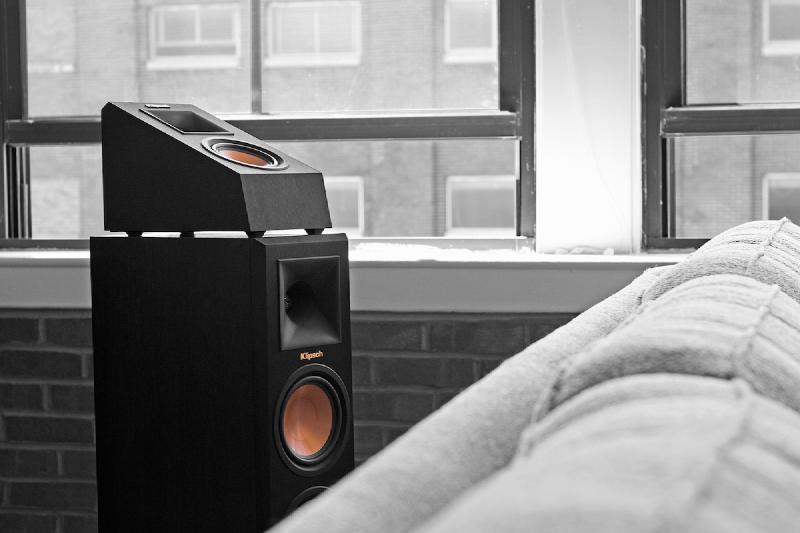
The logic behind adding a new height channel is that, in real life, sounds come from all around you – from objects below, at, and well above ear level – so you really need sound sources placed at more than just ear-level to accurately re-create this fully immersive environment.
Indeed, I’ve heard a Dolby Atmos surround set up (full disclosure: I’m yet to hear a DTS:X one), and it is truly impressive in the way that objects appear to have a discreet location in, and precise movement through, space – a space that extends well above the ceiling.
So let’s take a quick look at each of these new surround technologies, and see how they relate to, and differ from, each other.
Dolby Atmos #
Dolby was first to enter into the object-based super floaty 3D speaker realm (*not an official term) when it announced its Atmos technology for theatres back in 2012. It has since been rolling out to commercial theatres worldwide, finally making the leap to home theatres in June 2014. It has since been announced for inclusion on various Blu-rays, broadcast and video streaming services (any service that currently supports Dolby Digital Plus can do Atmos), and games (at the time of writing, only Star Wars Battlefront had been announced as being Atmos compatible, and it wasn’t entirely clear if it was just the PC version, or the PS4/Xbox One versions, too).
As previously mentioned, Atmos adds additional ‘height’ speakers to the usual 5.1 (or 7.1, or 11.2 etc., etc.) surround setup, similar to Dolby’s previous (and uncommon) channel-based Dolby Pro Logic IIz. The speakers aim to fill the air above your head, as well as aiding in giving more accurate placement of the sound objects. These new height speakers are denoted as an extra decimal point at the end of the numerical shorthand, so your 5.1 system with Atmos will become a 5.1.2 or 5.1.4 system.
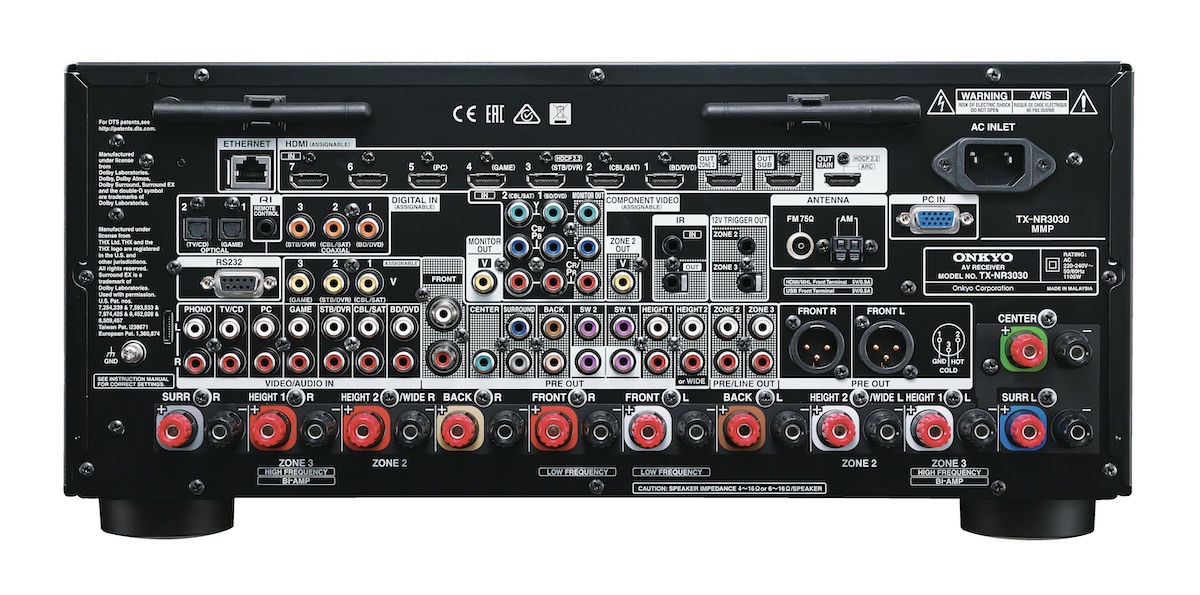
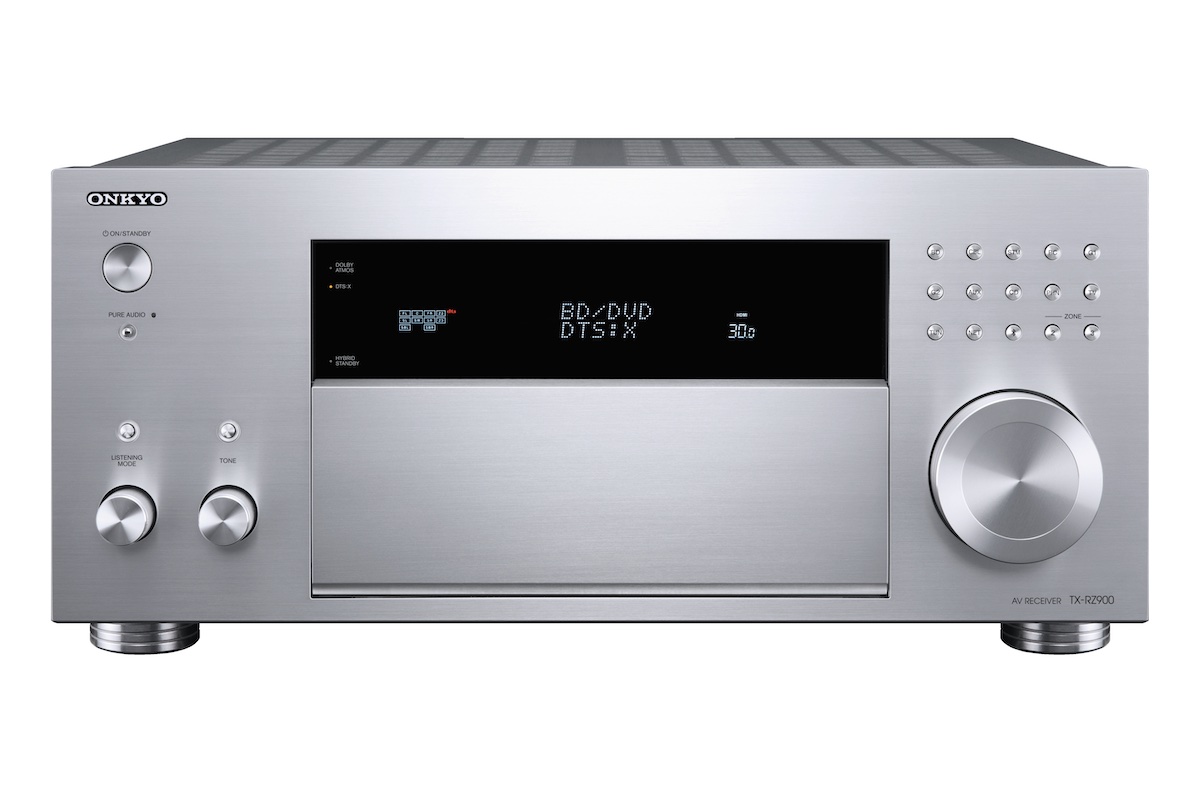
Left: Atmos and DTS:X amplifiers will now come with ‘height’ speaker connectors, such as seen on this Onkyo TX-NR3030 11.2 channel receiver (RRP $4199). Right: Onkyo’s TX-RZ900 7.2 channel receiver (RRP $2,999) supports both Dolby Atmos and DTS:X, up to a 5.2.2 system.
In choosing some new ceiling speakers, most high-power, full-frequency conventional overhead speakers with wide dispersion characteristics will work, and, to quote Dolby’s home theatre installation guidelines, “should be at least two times the height of the listener’s ear level.” As always, it’s recommended to match speaker models closely to existing speakers, and to never mix speaker models between left and right channels in the same position.
Most of us, however, don’t possess the ability to install in-ceiling speakers, so will opt for the ‘Atmos enabled’ up-firing units that reflect the sound off of your ceiling. These can be purchased as additions (to sit on top of your existing speakers like cute little hats), or as a complete unit that will work as your standard forward-firing channel as well as the up-firing height channel. Of course, these speakers come with two sets of speaker connections that must be connected to the correct channels on your A/V receiver, and mustn’t be bridged. There are currently Atmos enabled up-firing speakers available from the likes of Atlantic Technology, Definitive Technology, KEF, Klipsch, Pioneer, Triad, and Onkyo. Notably absent are many of the mid- to high-end home theatre brands, which some take as a sign of the system’s inadequacy, or perhaps its licensing costs.
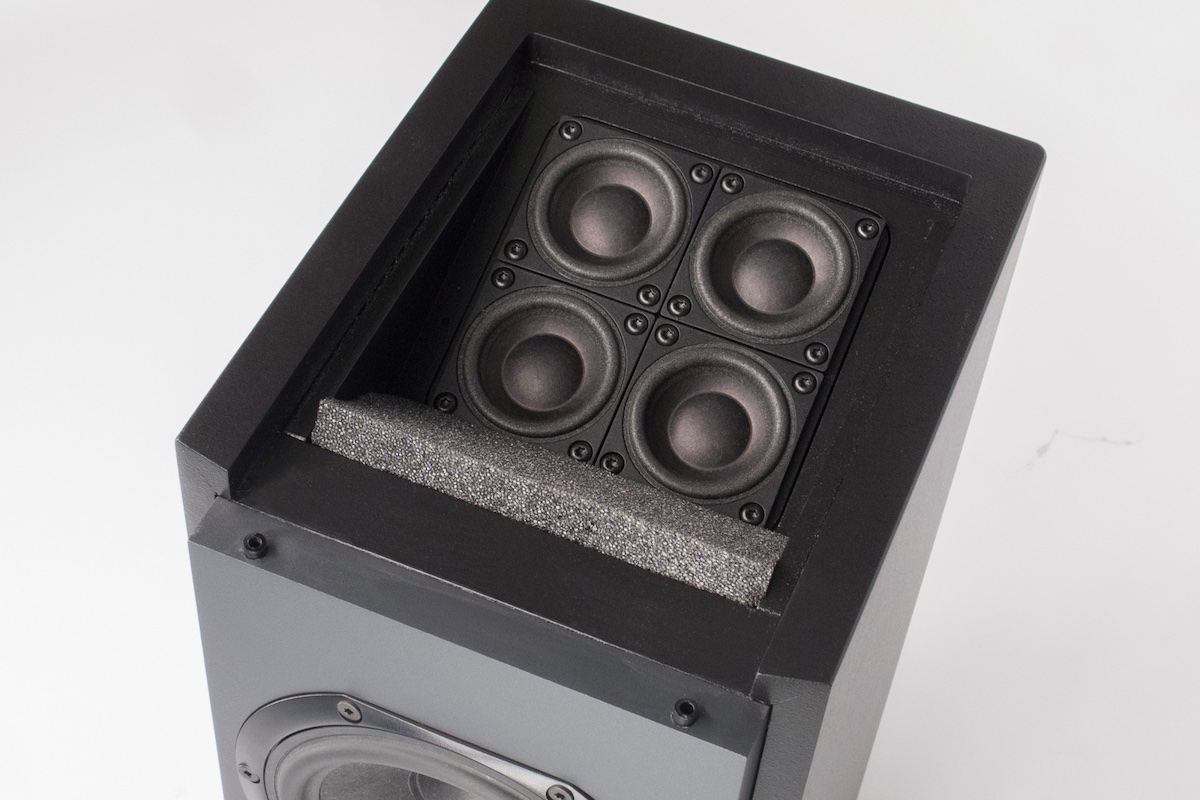
Now, there are some requirements for these up-firing speakers to work, too: you’ll need to have a flat ceiling of between 2.3 and 3.6 metres in height, that can have sound bounced off it (that is, no roof rugs). You’ll also need about 1.5m to the side of the seating position, so that the Atmos enabled speakers can be placed far enough away to not cause distraction.
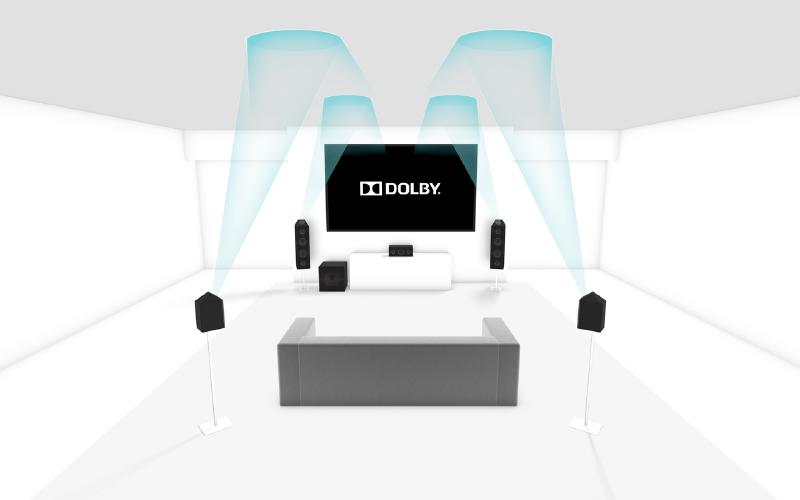
If you only have the budget for two ‘height’ speakers at first, then they should be installed at the front. However, the general consensus – from Dolby and reviewers alike – is that the system performs noticeably better with four – that is, both front and rear – height speakers: with just the front height speakers objects will ‘blur’ as they move to the rear section, whereas they will remain pin-point sharp throughout the whole sound field when all four height channels are present.
In fact, if you’re a total cinephile (and are struggling to find something to spend all of your money on), Atmos supports as many as 10 overhead speakers and as many as 24 ‘floor’ speakers, with each extra pair of speakers further enhancing the positional accuracy of the sound-objects. If you feel that this is a likely future for your home theatre, I’d really appreciate it if you invite me over some time, ok?
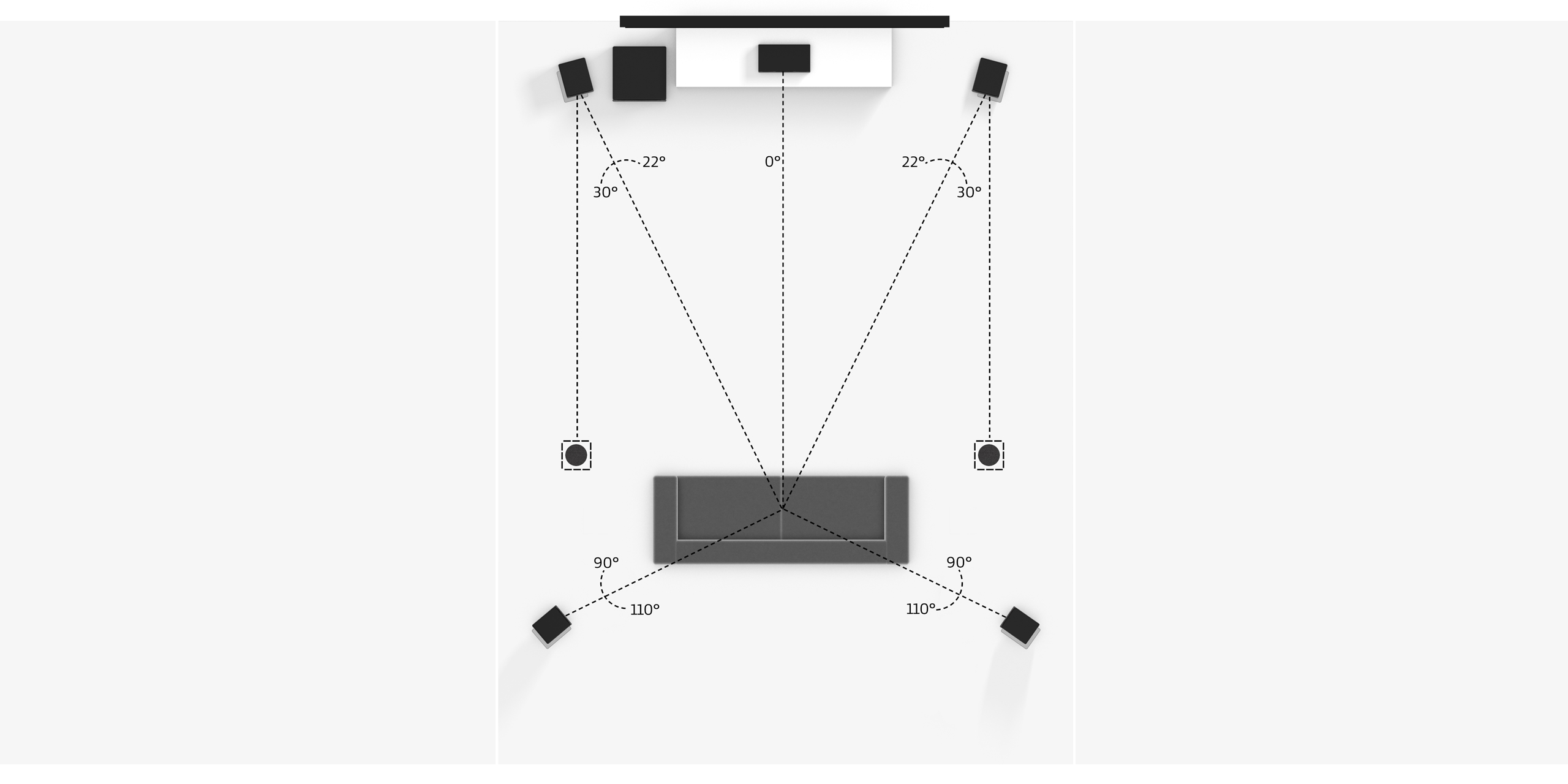
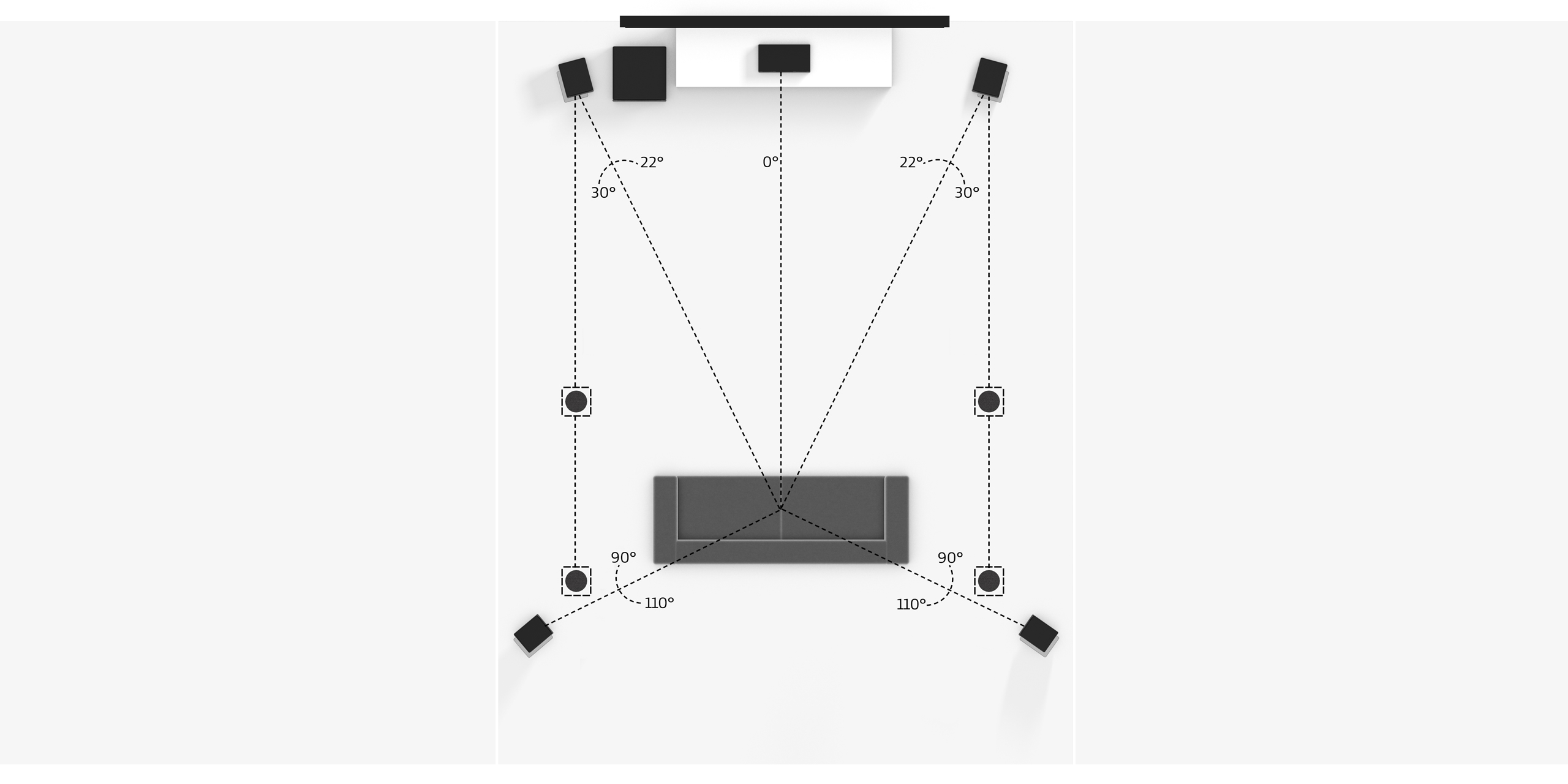
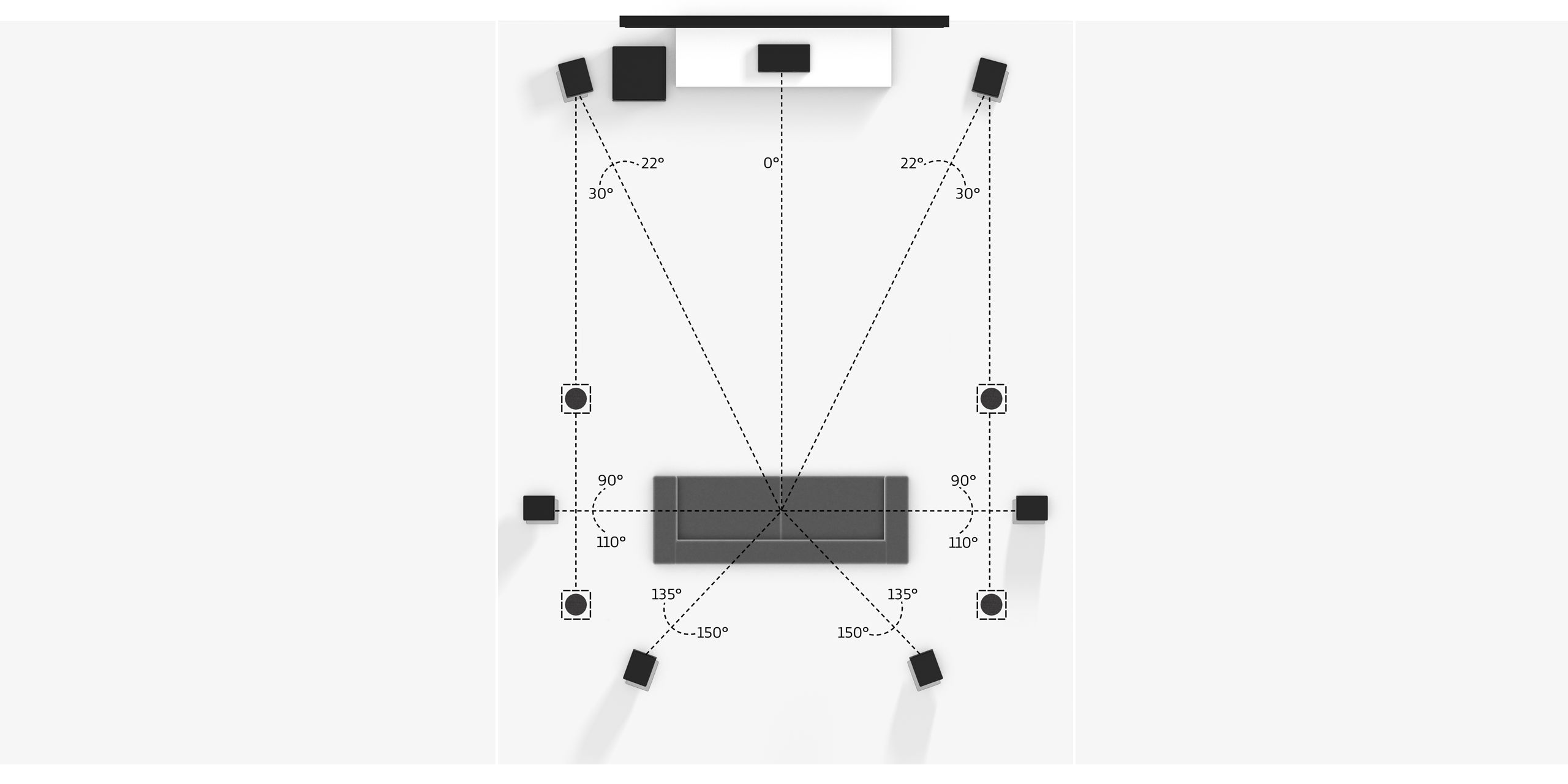
Dolby’s recommended speaker placement for, left to right: a 5.1.2 “Essential” Atmos system with two height channels, requiring a 7 channel amplifier and likely to be the most common setup; a 5.1.4 “Reference” Atmos system with four height channels — the driver for 9 channel amplifiers to become more common; and a 7.1.4 “Reference” Atmos system with four height channels, a design only for cinephiles, as it requires an expensive 11 channel amplifier.
As far as new equipment is concerned, Atmos is an extension to the existing Dolby TrueHD (a lossless codec primarily used on Blu-ray) and Dolby Digital Plus (a lossy codec primarily used for streaming services) codecs, which means that most recent Blu-ray and streaming video players will work, even if it wasn’t on the box when you bought yours – you just need to make sure that the playback device is connected to your receiver via HDMI (no new cable required: see my A/V Masterclass column in TechLife 41, September 2015), and that the playback device is set to ‘bitstream output’ with the secondary audio mixing option disabled.
However, you will need an Atmos-capable receiver or processor: while there are firmware updates available that provide Atmos capabilities to many of the higher-end models made last year, don’t expect one for anything older than that. This is not only due to the increased processing requirements of Atmos, but – obviously – also the extra channels required (which leads to an interesting point noticed by Mark Fleischmann at Sound & Vision Magazine: are 7 channel receivers moving toward obsolescence, now that 5 + 4 is the recommended setup?
Thankfully, there are already models available from Denon, Integra, Marantz, Onkyo, Pioneer, Steinway Lyngdorf, Trinnov, and Yamaha, with many being DTS:X compatible, too.
DTS:X #
DTS was later to announce its new object-based surround system, DTS:X, but has brought with it a few features that will mean that it won’t immediately be relegated to the technological dustbin of obscurity (unlike, in my opinion, the doomed-before-it-started Auro-3D surround system).
DTS:X was announced in April of this year and, like Atmos, will find use in both commercial and home theatres. In order to gain as much traction as possible, DTS:X was designed to work with any speaker configuration with a ‘hemispherical layout.’ This means that it will work with an Atmos enabled setup, or even your existing 5.1 system (but height channels are recommended for best effect).
Like other DTS formats, DTS:X uses a ’lossless’ compression, meaning that you’ll get full spectrum glory, just as if it were uncompressed, and, as it also supports ‘HD Audio’ quality, you’ll also be able to experience frequencies that human ears can’t even hear (which excites some people).
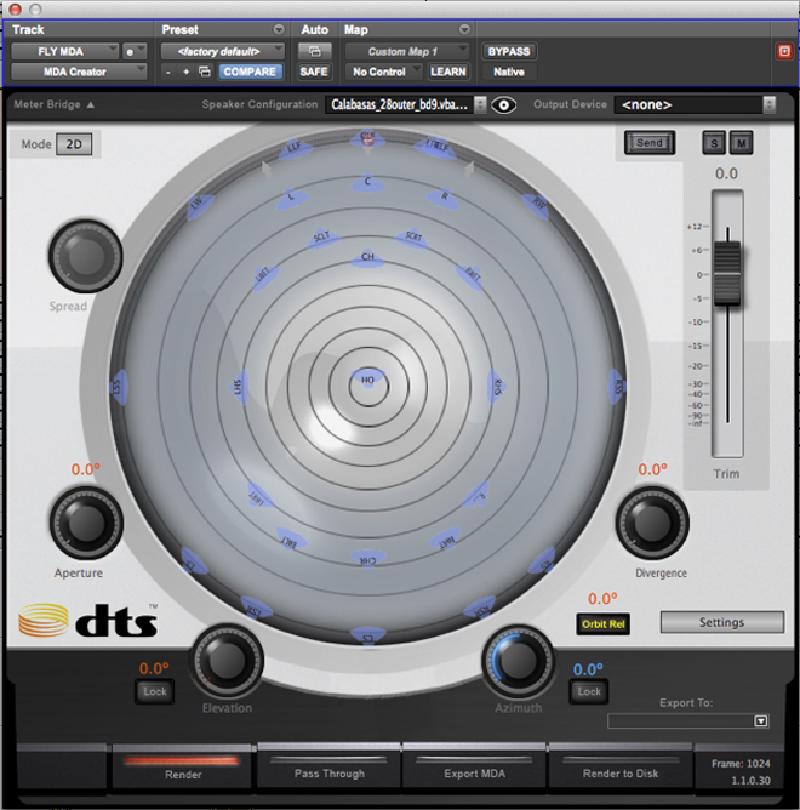
To gain acceptance from, and use by, movie studios, DTS has released the software needed to mix DTS:X soundtracks – known as MDA – for free. And, further, any cinema already fitted out for Atmos can be retrofitted to work with DTS:X for around US$6000, so expect more films mixed in DTS:X to come in the future.
Finally, there is one final feature of DTS:X that makes it truly stand out: the ability to remix the channels as needed. This feature will be rolled out in the future as sound processors grow more powerful, but it will initially launch as the ability to independently control the volume of the dialog in a soundtrack – a boon to night owls and the hearing impaired alike.
As far as acceptance goes, DTS claims that manufacturers responsible for 90% of the consumer A/V marketplace have signed on to create DTS:X compatible receivers, and, indeed, there are now models available (or coming soon) from Anthem, Cambridge, Denon, Elite, Integra, Krell, Marantz, McIntosh, Onkyo, Outlaw, Pioneer, Steinway Lyngdorf, Theta Digital, Trinnov Audio, and Yamaha, with many models supporting both DTS:X and Dolby Atmos. Similar to Atmos, DTS:X will be included not just on Blu-rays, but also has plans for support from streaming services, including Netflix, as well as in games and broadcast TV.
However, given the storage requirements, it’s unlikely that consumers will see Blu-ray discs that contain both DTS:X and Atmos soundtracks, so it really is recommended that you get a receiver that supports both formats, lest you be forced to watch your new favourite flick in anything less than object-based surround glory.
The future is objectified #
Despite Blu-rays only coming in one sound format or the other, we have the rare privilege of not actually having to pick a side in this particular format war – the two formats will probably coexist, eventually becoming transparent for the majority of consumers.
So, even though there is only one DTS:X Blu-ray currently available (Ex Machina), and no games yet announced – compared to over a dozen Atmos Blu-rays already available, and hundreds of movies having hit the cinema in Atmos – it’s not like DTS:X will suffer from Atmos’ head start, as consumers will probably end up with receivers that transparently support both, anyway. In this sense, it seems that both formats will win this particular format war.
Further, it’s a huge relief that the consumer can be safe in the knowledge that, even if they buy into Dolby Atmos now, their speaker setup and placement won’t necessarily have to change when they next upgrade to a receiver that includes support for DTS:X. In fact, they don’t even need to install in-ceiling or up-firing speakers if they don’t want to: both Atmos and DTS:X will work with standard 5.1 or 7.1 systems, too.
With this in mind, it seems that object-based surround systems with looser requirements for speaker placements are now the new norm and I, for one, welcome our new in-ceiling overheads.
Atmos installation guide
You can download Dolby’s official Atmos installation guide, which outlines the requirements for several different configurations, here.