
It’s geek-meets-nerd in this knowledge love-fest.
Plant control is the new Kinect #
Not a day goes by where I haven’t looked at the potted blue throatwort (Trachelium caeruleum) sitting on my desk and thought: “Why am I using this mouse when a perfectly good plant sits right in front of me?” Not a day.
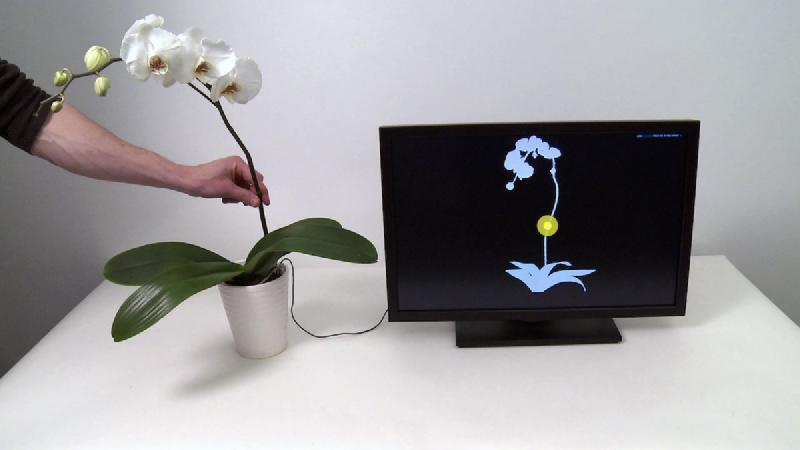
Lucky for me, Disney has my back. Yes, in the deep dark depths of Disney Research’s secret labs, experts have created a method of controlling an electronic device, such as a computer or electronic instrument, by simply touching a plant.
Dubbed (in typical Disney fashion) ‘Botanicus Interacticus’, the system uses an electrode placed in the soil to gently electrify the plant body, and, using Swept Frequency Capacitive Sensing (SFCS) technology, it is then able to determine where on its body is being touched, as well as the nature of the touching – like a stroke, a tap, or a hover.
The idea, of course, is to turn more aesthetically pleasing objects into controllers for remote devices, such as touching the plant to answer a hidden speaker phone.
Clearest images ever taken of the sun #
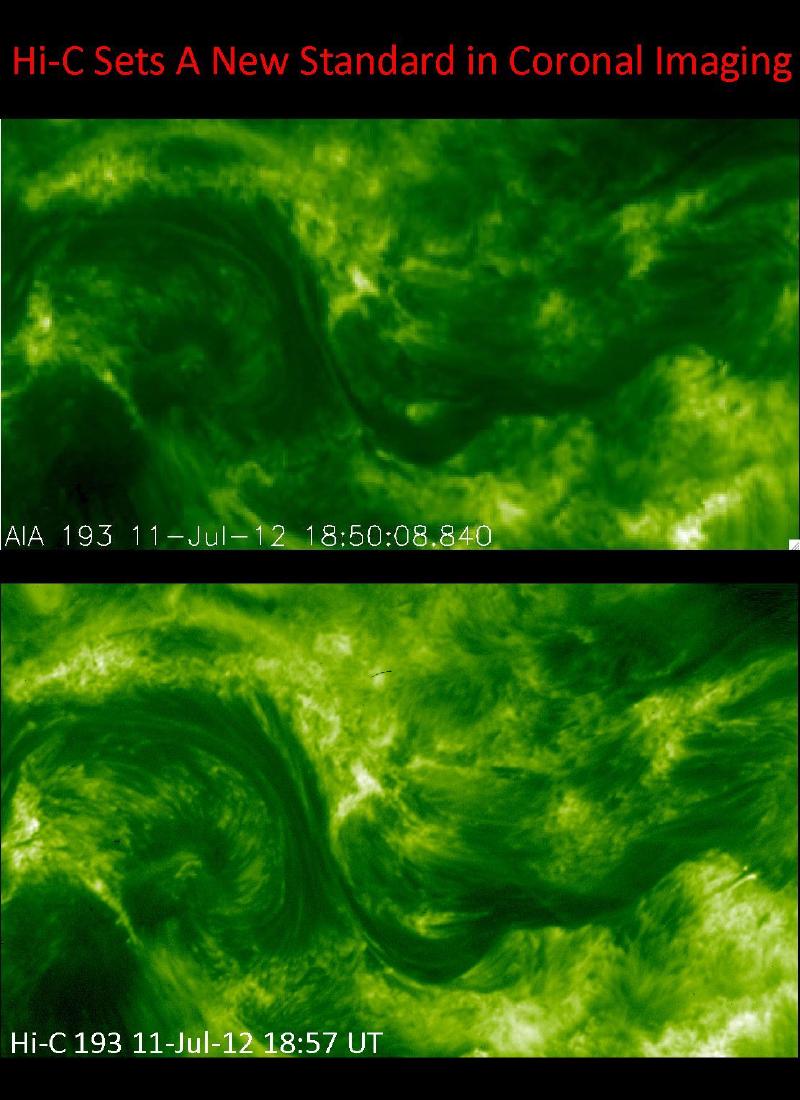
Go science! A telescope launched aboard a NASA sounding rocket back in July, has captured the highest-resolution images ever taken of the sun’s million-degree atmosphere, called the corona.
Known as the High Resolution Coronal Imager (HI-C), the 210 kilogram, 3 metre-long telescope took 165 ’extreme ultraviolet’ images of the corona during its short-lived, 620-second flight. The HI-C focused on a large active region on the sun, with some images revealing the dynamic structure of the solar atmosphere in fine detail.
The previous-best sun snapper, the Atmospheric Imaging Assembly (AIA) instrument, flying aboard NASA’s Solar Dynamics Observatory, can see structures on the sun’s surface with clarity of approximately 1,000 kilometres across, and observes the sun in ten wavelengths of light. Hi-C observed features down to roughly 135 miles but observes the sun in just one wavelength.
The clarity of the images has been said to help scientists better understand the behaviour of the solar atmosphere and its impacts on Earth’s space environment, but I think they just look really, really cool. Or hot. Whatever, they look amazing.
Twitter predicts personal illness 8 days in advance #
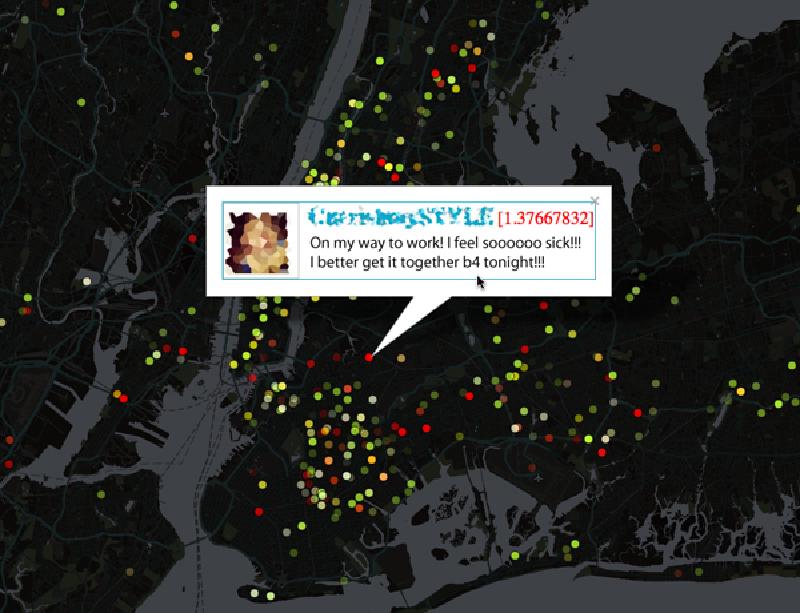
Researchers at the University of Rochester in New York have analysed a bunch of location-tagged tweets – 4.4 million of them from 630,000 users in New York City – to locate hotspots of ill-health, and then successfully predict which users will soon come down ill – with around 90 per cent accuracy up to 8 days in advance.
For this to work, they had to first figure out a way for their bot to differentiate tweets like ‘sick of all the hipsters here’ or ‘fully sick, bra’ vs ones where people are complaining about being actually sick. They then match up people’s regular movements to areas of known illness, leading to the accurate predictions.
Of course, the system can only highlight areas filled with sick, whinging Twitter users, and rarely do said people also tweet their symptoms, so distinguishing disease type and seriousness is also not possible. On top of this, it isn’t just your proximity to sick people that makes you ill, either.
Despite all this, it’s still a fascinating look at what useful intelligence can be gathered from the wealth of seemingly trivial information spewed out into the Twittersphere every day.