
A concentrated dose of nerdy news not suitable for the simple-minded.
World’s smallest game of Tetris #
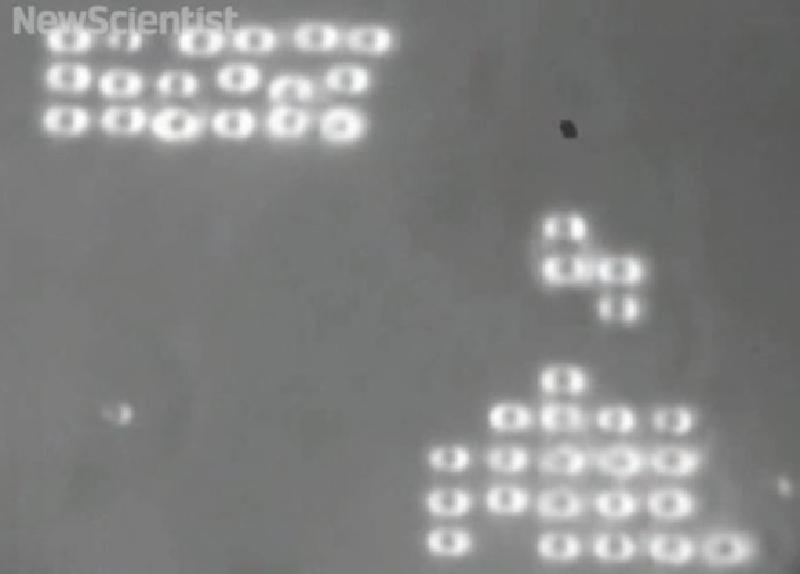
The original Game Boy was probably my favourite toy when I was a youngin, and Tetris was always on high rotation. Now, I would have thought that the Game Boy’s 4-shade monochromatic 2.6" screen would be responsible for the world’s tiniest Tetris blocks, but students at VU University Amsterdam have made me re-think my idea of just how tiny games can get.
Using optical tweezers, microscopic glass beads, and some good ol’ gaming know-how, the students created a game of Tetris where each block is only a few microns across. “Optical tweezers enable manipulation on the sub-micrometre scale as if you’re handling real tweezers,” says physicist Joost van Mameren, one of the creators of the game. “The focus of this beam acts as an attraction point for small particles: they get sucked into the focus and cannot escape.”
In the classic “throw the Monopoly board across the room because Mayfair is unfair” move, you can completely annihilate the playing field by switching the laser off.
Lego to aid in search for Higgs Boson #
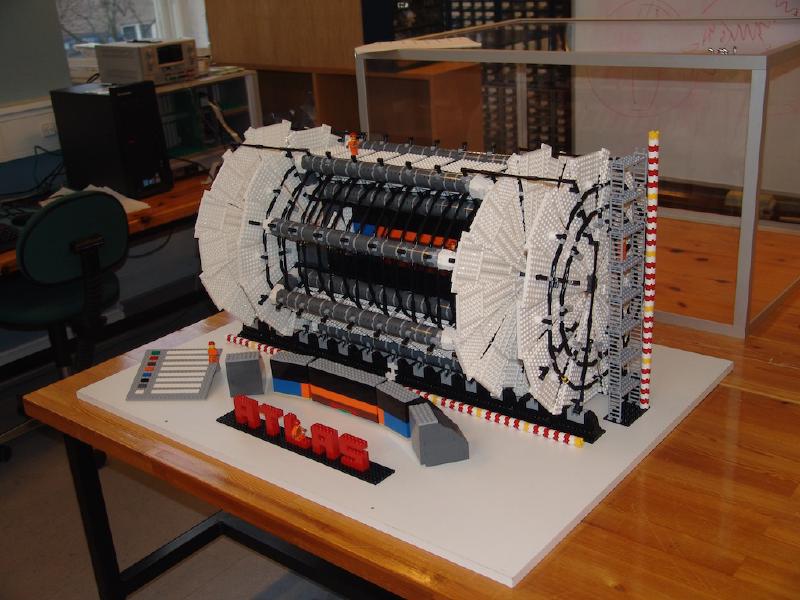
Ah, Lego. Is there anything you can’t build? Well, a functioning particle accelerator may strictly be beyond the abilities of the little plastic cubes, but that’s no reason not to build a darn fine scale model.
Sascha Mehlhase used 9,500 Lego blocks and about 71 hours of his time (48 hours to create a 3D model, and 33 to put the pieces together) to create a 1:50 scale model of the ATLAS experiment at the Large Hadron Collider, complete with miniature CERN employees tending to all the blinkenlights and such.
The model measures about 1m x 0.5m x 0.5 m, and illustrates all details, from the muon and magnet system to the innermost pixel detector. It cost about 2000 Euros to build (approx. $2,500)
OG geek’s notebooks now online #
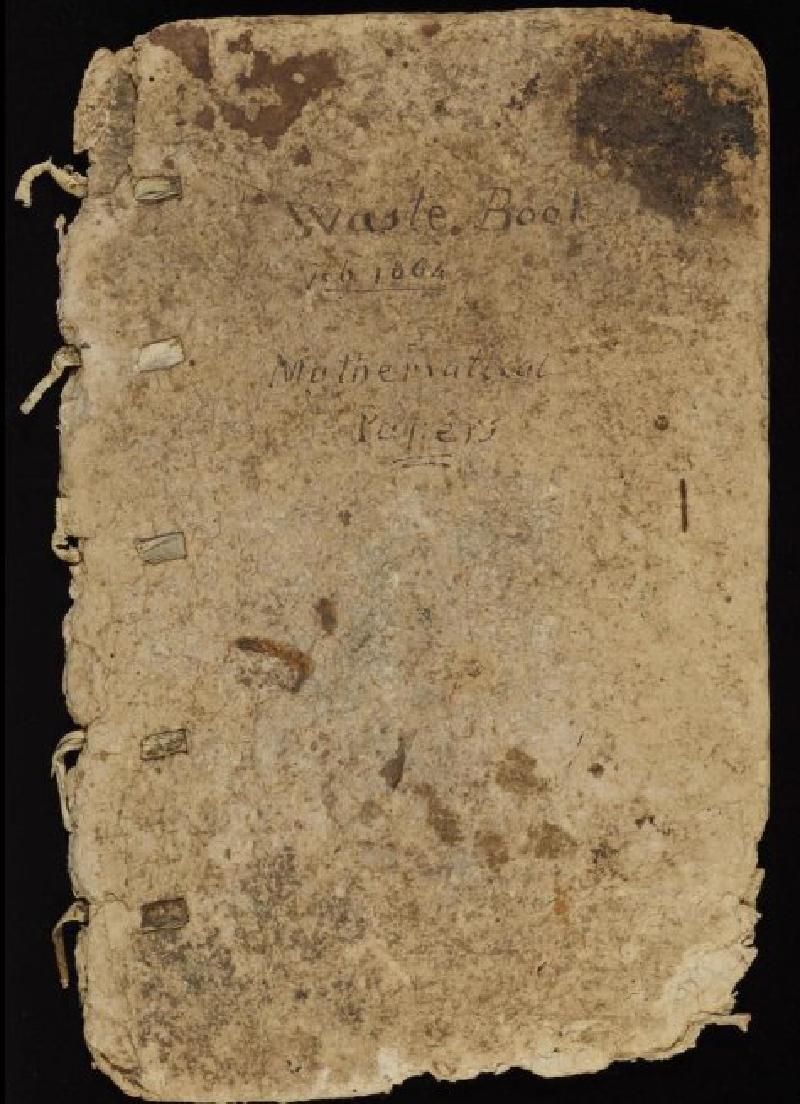
The notebooks and manuscripts of the OG geek, the father of physics, the creator of calculus, and general all round grumpy bastard, Sir Isaac Newton (1642 – 1727), have been scanned in and made available online by Cambridge University, where he was a student and lecturer.
The Cambridge Digital Library project – responsible for digitising the many ancient tomes that Cambridge holds in its vast libraries – has scanned in 4,000 pages of manuscripts so far (about 20% of the complete Newton collection held at Cambridge), including a “waste” book (old-school terminology for a notebook) used by both Isaac and his priestly stepfather, and Isaac’s personal, first edition, annotated version of his landmark 1687 Philosophiae Naturalis Principia Mathematica, which explains his three laws of motion, and kick-started physics as we know it.
The project will eventually place online documents from the likes of Charles Darwin, Ernest Rutherford, and other great scientific minds from history.