
The night sky has never been more accessible. Whether you’re pointing your phone at the stars or guiding a space shuttle home, these apps bring the universe to your fingertips.
Brian Cox’s Wonders of the Universe #
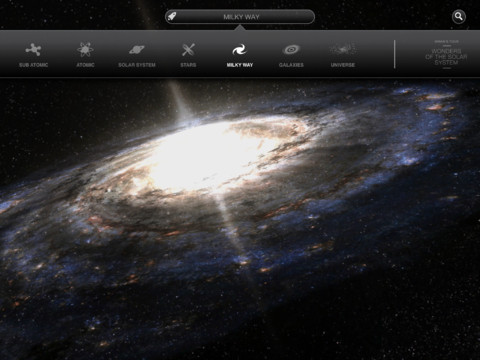
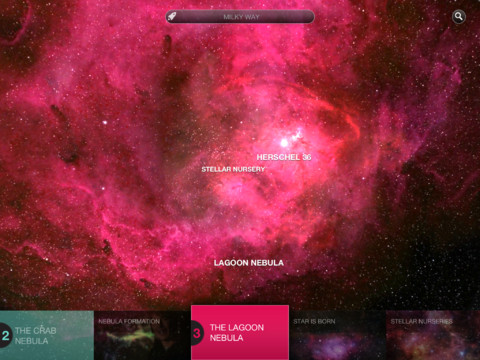
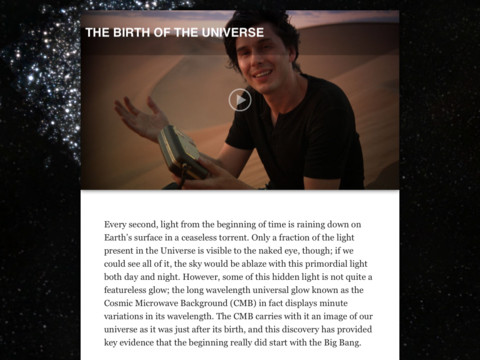
Released in conjunction with the (excellent) BBC documentary of the same name, this app provides an insight into the universe through 200 different articles and two-and-a-half hours of video across 7 different scales – from subatomic to the whole universe.
Travel past the moon, the planets, out of the solar system and Milky Way, to the very edge of the universe. On the way, you can interact with Red Giants, Nebulae, Neutron stars and Black Holes.
The app also includes hundreds of infographics and images of space objects supplied by NASA and other space researchers, and is optimised for the new iPad’s display. Simply beautiful.
Info// For: iOS
Price: $7.49
Star Chart #
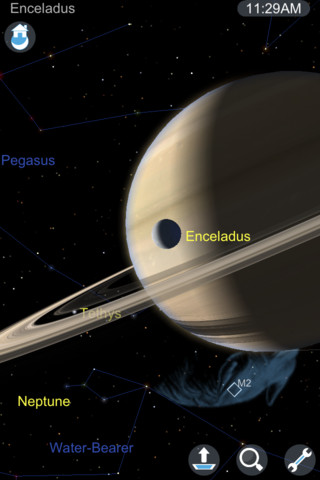
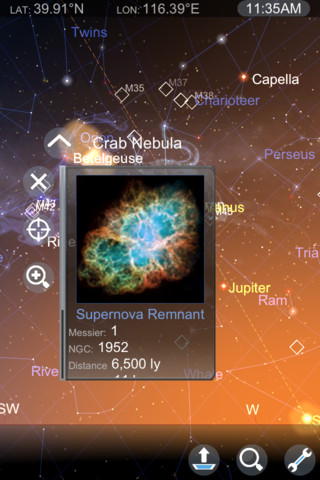
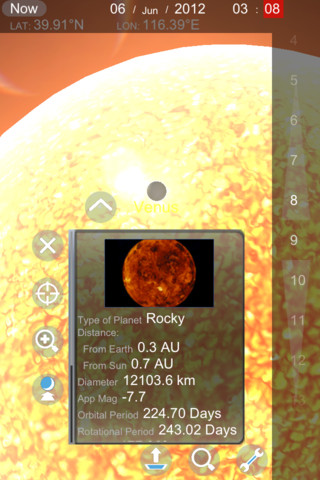
My favourite augmented reality app, Star Chart allows you to hold your phone up to the night sky and see information on what stars, constellations, planets and other interesting bits lie beyond.
You can switch on or off the different layers, so you can see only what you’re interested in. Extra information on any of the objects you see is available by clicking on it – no matter if it’s a galaxy, constellation, planet, or a single star.
I really like being able to see classical drawings of the different constellations, and appreciate the red-tinted night-mode that preserves your night vision.
Info// For: iOS + Android + WP7
Price: $2.99
Mars Globe 3D #
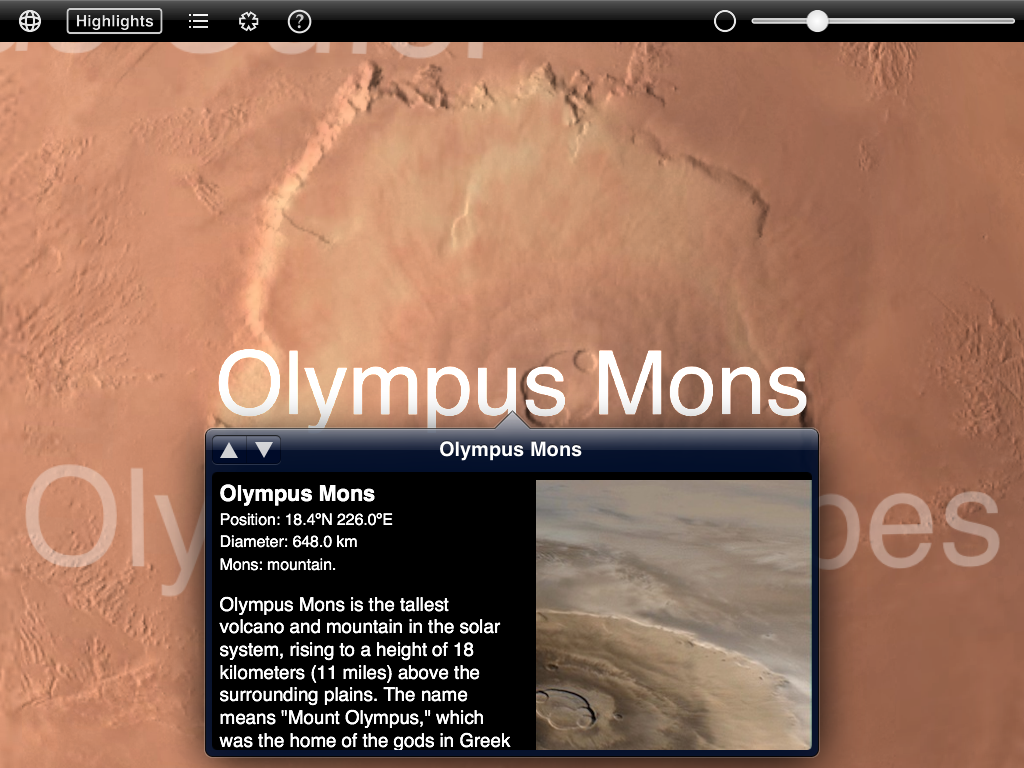
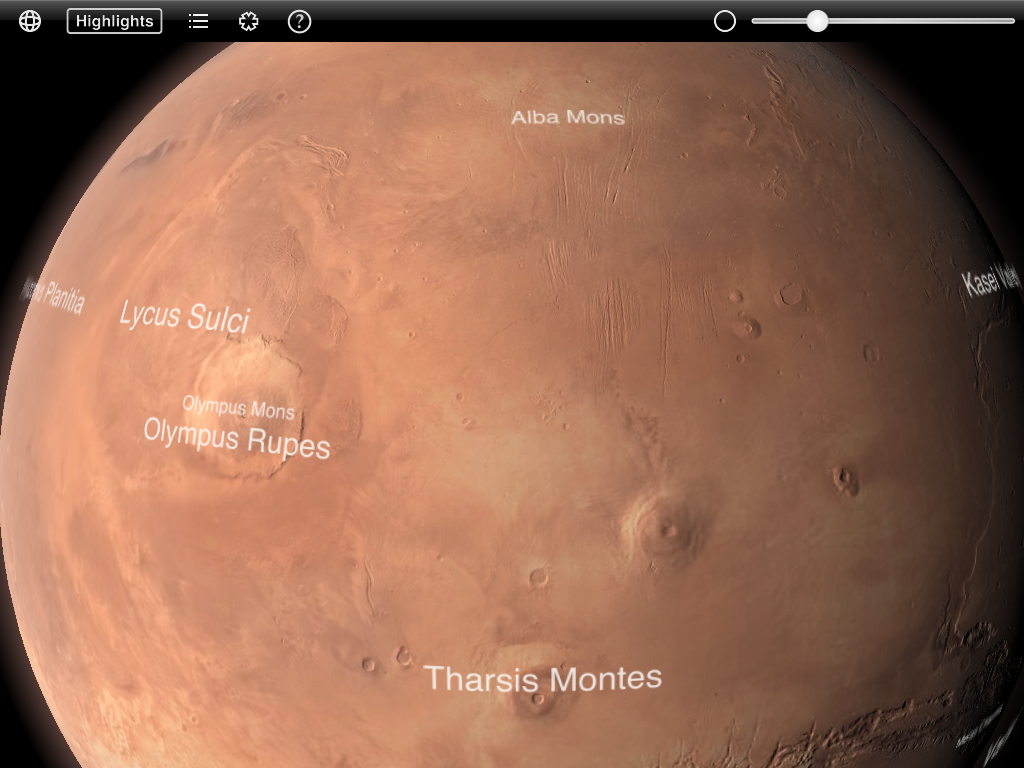
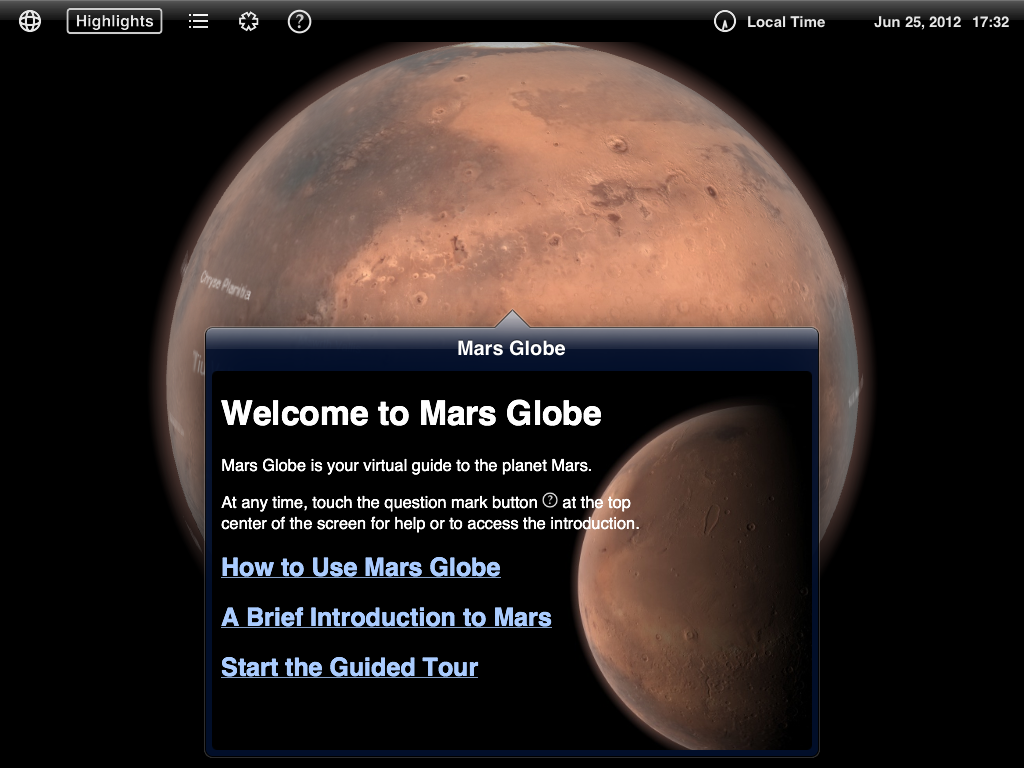
An interactive map of the nearest planet, Mars Globe 3D provides a guided tour of the red planet, or – if you’re more the type to explore foreign worlds all on your own – allows you to explore more than 1,500 interactive surface features.
Like Google Earth, the 3D globe is stitched together from high-resolution satellite imagery and laser altimeter data, and 3D processing makes sure the lighting looks as realistic as possible.
There is both a free or paid ($0.99) version available, with the only difference being slightly higher resolution images in the paid version.
Info// For: iOS
Price: Free/$0.99
NASA App #
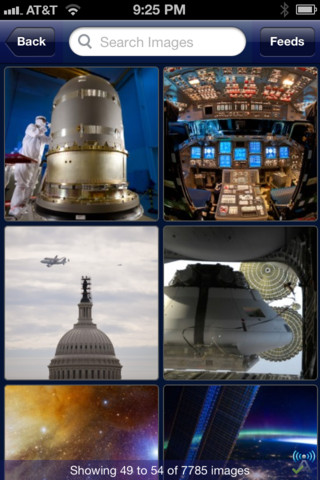
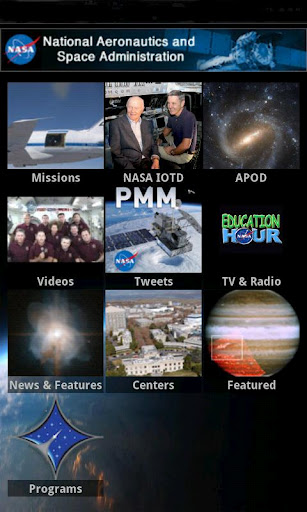
When it comes to space, NASA is a pretty big player. With numerous satellites orbiting the planet, or flying through the cosmos, they collect massive amounts of imagery of all manner of interesting celestial objects.
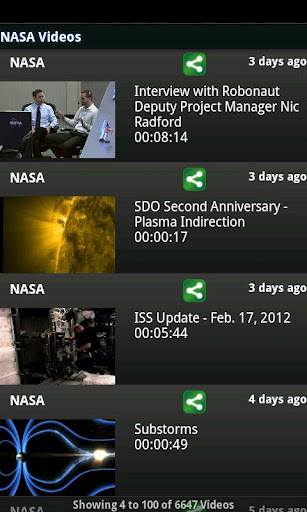
Fortunately for us, NASA compiles the very best images they receive, and puts them online daily. This app gives you access to that daily updated archive, complete with the descriptions. Additionally, you can also view videos, read the latest NASA news, find out when the next launch will be, track earth observation satellites and the international space station – including when the next sighting will occur – and even listen to the Third Rock internet radio station.
Info// For: iOS + Android
Price: Free
Sundroid Pro #
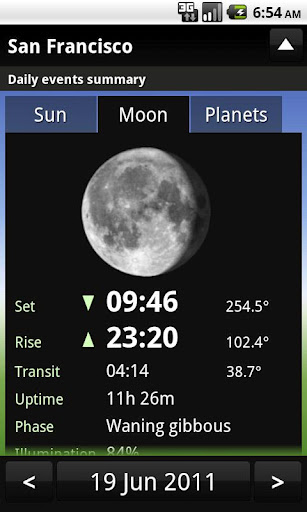
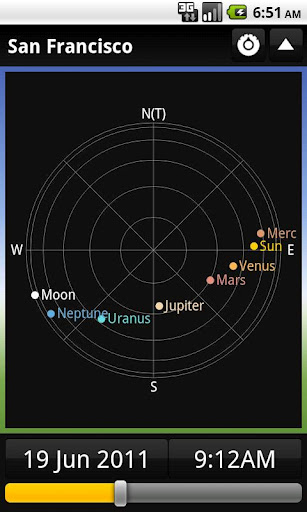
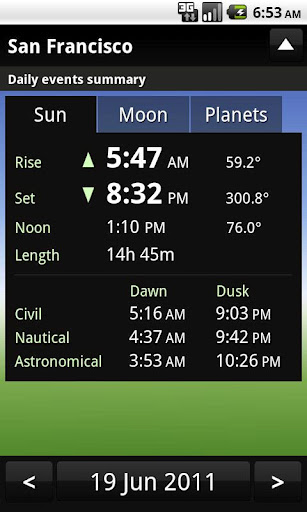
Calculates sunrise, sunset, twilights, golden hours, length of day, the path of the sun and moon, moonrise & moonset times and more for any date, anywhere in the world.
Additionally, you can see lunar phase and illuminated fraction, as well as rise, set and transit times for the moon, Mercury, Venus, Mars, Jupiter, Saturn, Uranus and Neptune.
It also contains information on solar and lunar eclipses, solstices and equinoxes, Earth aphelion (furthest point from the sun) and perihelion (the nearest) up until the year 2020.
You can also set notifications and alarms for sun and moon rise and set events, or view monthly calendars showing how times change each day. Also includes widgets.
Info// For: Android
Price: Free/$2.99
The Invisible Universe #
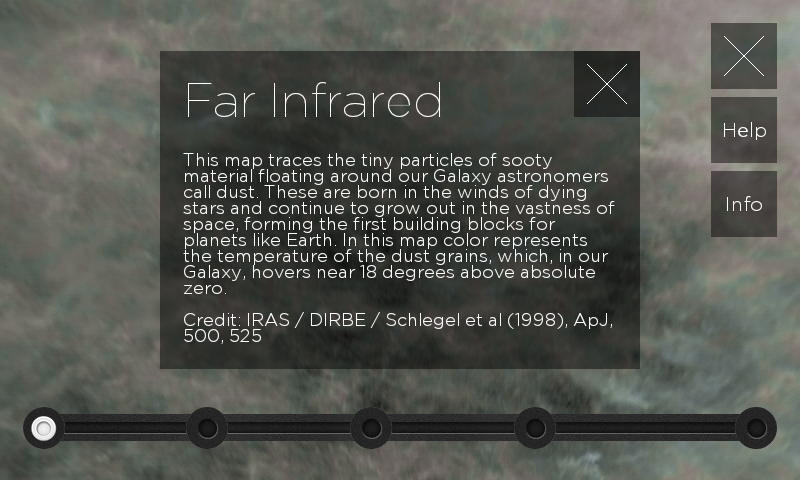
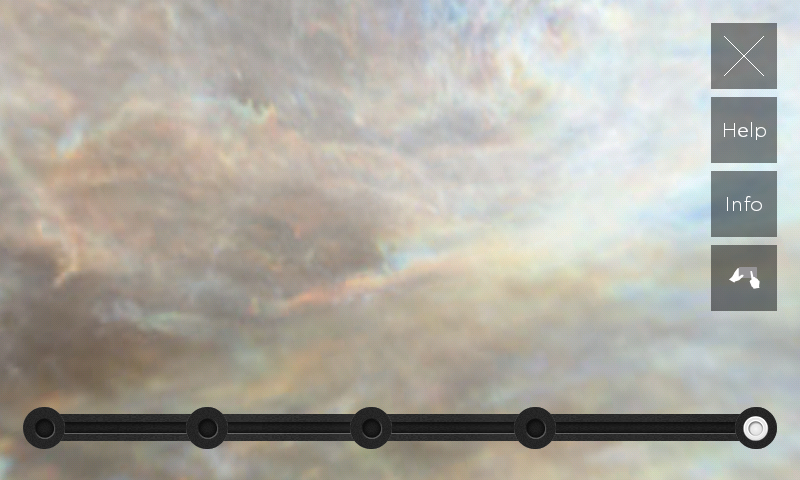
This app aims not to show you what you can see in the night sky, but what you can’t. Specifically, it focuses on those frequencies beyond the visible spectrum.
You can hold the phone up to the night sky, and view what lies beyond across 5 different views; gamma rays, x-rays, far infrared, neutral gas, and ionised gas.
A little more info would be nice, but I like the app as it really shows that there is so much more to the universe than what the eye can see.
Info// For: Android
Price: Free
Sky Safari #
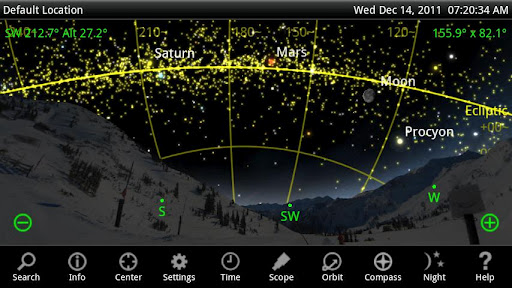
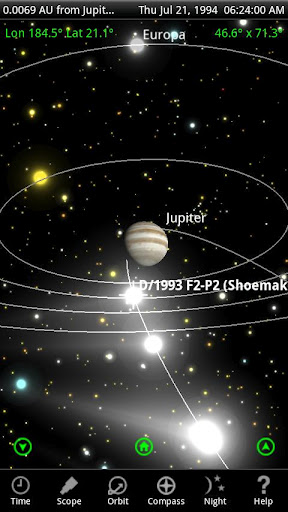
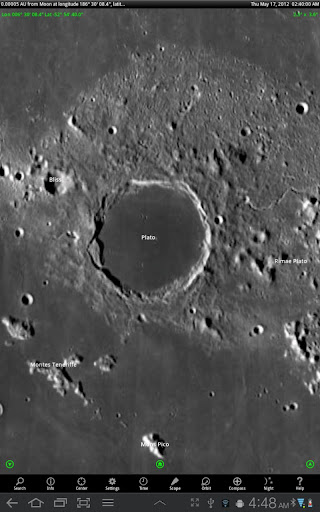
More than just a keen astronomer? Looking for something a little more in-depth than the other night sky apps? SkySafari is an app designed for astronomers, by astronomers. It comes in three flavours; regular, plus, and pro, with each one coming with more detail than the last. Plus and pro also come with telescope control, compatible with SkyFi or SwyWire accessories.
You can view the stars from any point in our Solar System, and from any point in time a million years in the past or future, making the whole ‘space travel’ thing seem a little redundant.
Info// For: iOS + Android
Price: approx. $3 (regular), $15 (plus), $40 (pro).
Exoplanet Explorer #
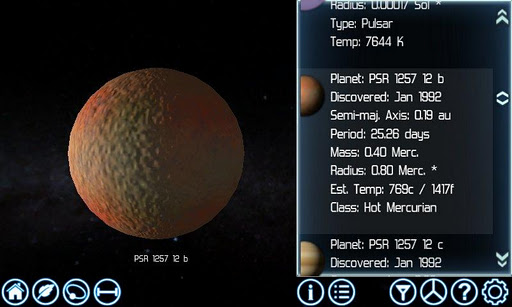
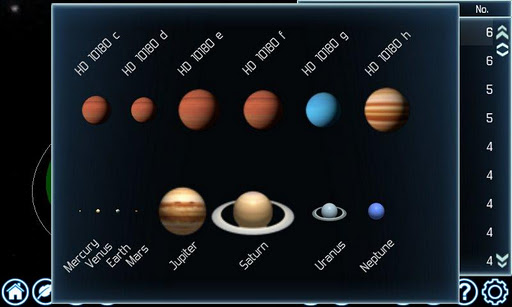
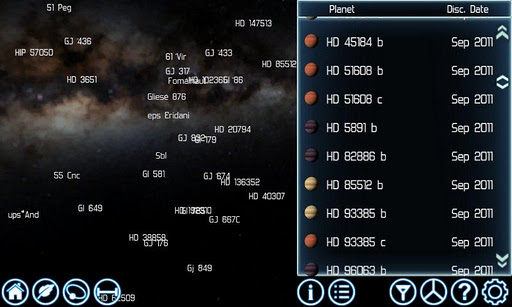
More of a planet person than a star sucker? Sourcing its information from the Exoplanet Encyclopaedia, SIMBAD, as well as scientific papers, Exoplanet Explorer brings you all the information we know on the 700 known planets and the star systems they reside in.
You can either browse or search the exoplanets and systems, with planets being divided into 6 size and 3 thermal classes, too, meaning you can easily pick the type of planet that you’re keen on.
Best of all, the app automatically updates the exoplanet data, keeping you abreast of the latest discoveries.
Info// For: Android + Playbook
Price: $3.29 / US$2.99
F-Sim Space Shuttle #
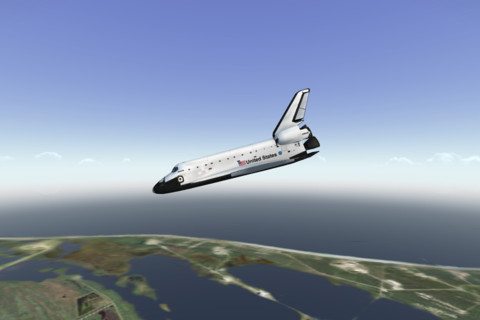
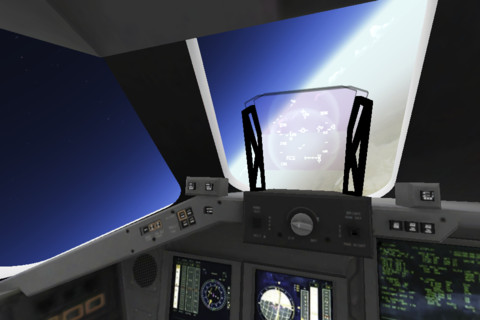
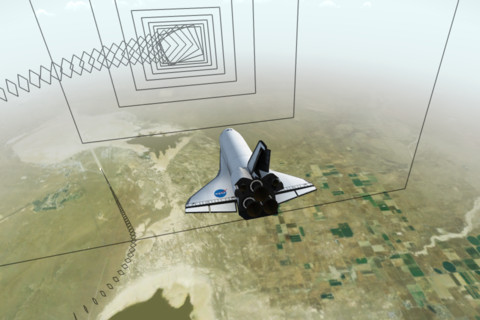
Pretend you’re coming home after a long month’s work out in space with this Space Shuttle simulator.
There are few crafts more badass to pilot than a space shuttle – after all, the Orbiter’s approach is seven times steeper and twice as fast as a commercial airliner’s – so why not take on the challenge and pretend that you’re about to touch down at the JFK space centre?
The included manual and tutorials will familiarise you with the heads up display and explain the different approach and landing phases. After some practice and your first successful touchdown, you can try crosswind or night landings, or even simulate a fault.
Info// For: iOS
Price: $4.49
Moon Atlas #
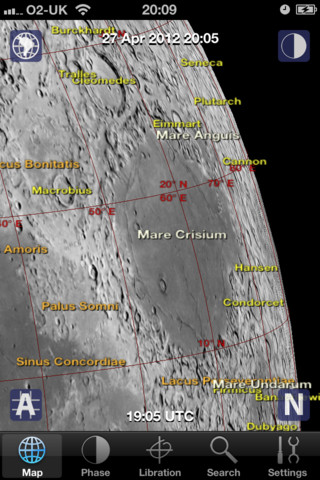
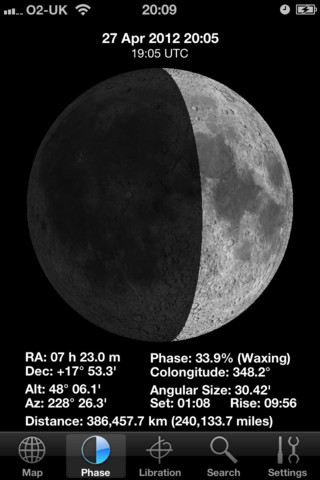
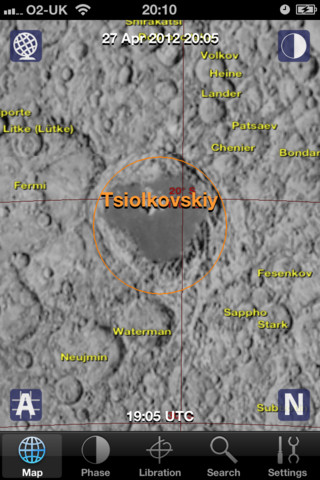
I have some serious love for the moon. That big beaming face has been smiling down on me for my whole life, yet I feel I barely know it. Moon Atlas is, as you have probably guessed, a compendium of lunar features – over 1800 features, in fact – accessible by flying over the surface of our nearest neighbour.
You can view its current phase and libration, relative to any position on Earth, or any time in the past or future.
Does your inter-planetary affection lie elsewhere? Mars, Mercury, Venus, Jupiter and Saturn atlases are also available on the App Store.
Info// For: iOS
Price: $6.49